|

 Bubble Nucleation in
Liquids Bubble Nucleation in
Liquids
Classical
bubble nucleation theory, originally proposed by W. Gibbs assumes the
formation of the critical size bubble. This theory fails to predict the
amount of decompression for gaseous bubble formation in water-gas solutions.
It also fails to predict the tensile strength of liquids. In addition, the
classical theory gives no information about the evaporation intensity at the
superheat limit.
Using
a new surface energy for the formation of the critical cluster(Molecular
Cluster Model), models for the gas bubble formation in gas-liquid solution[1]
and for the vapor bubble formation within a liquid under tension[2,3] were
proposed. Our cluster model for bubble nucleation can descripe correctly the
evaporation phenomena at the superheat limit[3]. How a critical cluster grows
to become a critical size bubble in gas-liquid solutions was also
theorized[4,5]. The cluster model of bubble nucleation may be applied to CO
bubble formation in iron-melt system characterized with high surface tension
and low vapor pressure[6] and the bubble formation on a cavity free
surface[7,8,9,10]. Recently the superheat limit of hydrocarbons and their
mixtures were measured precisely by using the droplet explosion technique
with visualization. The dynamic behavior of the bubble formed from the fully
evaporated droplet at its superheat limit was also investigated by measuring
the far field pressure signal from the bubble [11]. We reformulated
the cluster model for the bubble formation due to dissolved gas molecules and
activated vapor molecules in a unified way [12]. Thermal as well as quantum
nucleation of bubbles and the cross-over from thermal to quantum regime in
liquid helium under negative pressure near the absolute zero temperature was
investigated by using the molecular cluster model based as theLondon dispersion force
between molecules [13]. In addition, it was found that the "molecular
culster model" for the bubble formation could be extended to predict the
laser-induced cavitation which has become important in the field of laser
mediated surgery [14] and gaseous bubble nucleation events in elastomers,
polymers and polymer solutions [15], which is very important in polymer
processing [16] to produce foamed materials and microcellular plastics. A bubble-powered micropump which consists of two-parallel microline heaters,
and a pair of nozzle-diffuser flow controller was fabricated and tested [17].
We found that the mechanism of the light emission from the laser-induced
bubble at its first collapse might be due to the black body radiation [18].
More work will be done on the bubble nucleation and growth on a cavity free micro
heaters, which could evolutionize the designs and applications of thermal
micromachines. Recently, we have reported how gaseous bubble nucleation occurs under shear flow[19]. An effort to understand the absolute metastable limit of liquid was alos tried based on our bubble nucleation model[20]. A review of our bubble nucleation model appears in an entry of
2nd edition of Encyclopedia of Surface and Colloid Science
published in 2006 [21]. Explosive boiling processes on the surfaces of nanoparticles irradiated
using a high-power laser have been
studied for use in medical applications, such as cellular surgery and photo-thermal
killing of cells. Recently,
detailed theoretical study on nucleation and subsequent evolution of bubbles on
the surfaces of nanoparticles irradiated using a high-power laser has been done
in PCLCAU [22].
[1]
Ho-Young Kwak, R.L. Panton, "Gas bubble formation in non-equillibrum
water-gas solutions," Journal of Chemical Physics. Vol. 78.
pp.5795-5799, 1983.
[2] Ho-Young
Kwak, R.L. Panton, "Tensile strength of simple liquids predicted by a
model of molecular interactions," Journal of Physics, D, Applied
Physics, Vol. 18, pp. 647-659, 1985.
[3]
Ho-Young Kwak, Sangbum Lee,"Homogeneous bubble nucleation predicted by a
molecular interaction model," ASME Journal of Heat Transfer, Vol.113,
pp. 714-721, 1991.
[4]
Ho-Young Kwak, "Homogeneous bubble nucleations," Applied Mechanics
Review, Vol. 43, pp.164-165, 1990.
[5]
Ho-Young Kwak, Yong W. Kim, "Homogeneous nucleation and macroscopic
growth of gas bubble in the organic solutions," International Journal of
Heat Mass Transfer, Vol. 41, pp. 757-767, 1998.
[6]
Ho-Young Kwak, Si-Doek Oh, "A model of homogeneous bubble nucleation of
CO bubble in Fe-C-O melts," Journal of Colloid and Interface Science,
Vol. 198, pp.113-118, 1998.
[7] Si-Doek
Oh, Sam-Sun Seung, Ho-Young Kwak, " A model of bubble nucleation on a
micro line heater," ASME Journal of Heat Transfer, Vol. 121, pp.
220-225, 1999.
[8]
Jung-Yeop Lee, Hong-Chul Park, Jung-Yeul Jung, and Ho-Young Kwak,
"Bubble nucleation on micro line heaters," ASME Journal of Heat
Transfer, Vol. 121, pp. 687-692, 2003.
[9]
Jung-Yeul Jung, Jung-Yeop Lee, Hong-Chul Park, and Ho-Young Kwak,
"Bubble nucleation on micro heaters inder steady or finite pulse of
voltage input," International Journal of Heat and Mass Transfer, Vol.
46, pp. 3897-3907, 2003.
[10]
Jung-Yeul Jung and Ho-Young Kwak, "Bubble nucleation and behavior on
micro square heaters," Nanoscale and Microscale Thermophysical Engineering,
Vol. 10, pp. 95-107, 2006. (featured on the issue cover)
[11]
Hong-Chul Park, Ki-Taek Byun, and Ho-Young Kwak, "Explosion boiling of
liquid droplets at their superheat limits," Chemical Engineering
Science, Vol. 60, pp. 1809-1821, 2005.
[12]
Ho-Young Kwak, and Si-Doek Oh, "Gas-vapor bubble nucleation; An unified
approach," J. of Colloid and Interface Science, Vol. 278, pp. 436-446,
2004.
[13]
Ho-Young Kwak, Jung-Yeul Jung and Jae-Ho Hong, "Quantum nucleation
of bubbles in liquid heliums," J. Phys. Soc. Jpn., Vol. 71, pp.
2186-2191, 2002.
[14]
Ki-Taek Byun, and Ho-Young Kwak, "A model of laser-induced
cavitation," Jpn. J. Appl. Phys., Vol. 43, pp. 621-630, 2004.
[15] Seong
Lin Karng, Ki Young Kim, and Ho-Young Kwak, "Bubble nucleation and
growth in polymer solutions," Polymer Engineering and Science, Vol. 44,
pp. 1890-1899, 2004.
[16]
Ki Young Kim, Sung Lin Kang, and Ho-Young Kwak, "Generationof microcellular foams by supercritical carbond dioxide in a PMMA compound," International Polymer Processing, Vol. 23, pp. 8-16, 2008.
[17]
Jung-Yeul Jung and Ho-Young Kwak, "Fabrication and testing of
bubble-powered micropumps using imbedded microheater," Microfluidics
and Nanofluidics, Vol. 3, pp. 161-169, 2007.
[18]
Ki-Taek Byun, Ho-Young Kwak, and Sarng Woo Karng, "Bubble evolution
and radiation mechanism for laser-induced collapsing bubble in water,"
Jpn. J. Appl. Phys., Vol. 43, pp. 6364-6370, 2004.
[19] Ho-Young Kwak and Ki-Moon Kang, " Gaseous bubble nucleation under shear flow," International Journal of Heat and Mass Transfer, Vol. 52, pp.4729-4937, 2009.
[20] Ho-Young Kwak Ki-Moon Kang and Ilgon Ko, "The absolute metastable limit of liquids under tension --- A review," Journal of Mechanical Science and Technology, Vol. 25, pp. 863-869, 2011.
[21]
Ho-Young Kwak, Bubbles: Homogeneous nucleation, in Encyclopedia
of Surface and Colloid Science, 2nd Edition, pp.
1048-1071, CRC Press, 2006.
[22] Ho-Young Kwak, Jaekyoon Oh, Yungpil Yoo, Shahid Mahmood,
“Bubble formation on the surface of laser-irradiated nano-sized particles,”
Journal of Heat Transfer, Vol. 136, pp. 081501-1~081501-9, 2014.
Bubble Dynamics and
Sonoluminescence Phenomena
Understanding
of the behavior of bubble inside liquid is not a simple problem. The full
hydrodynamic problem for the bubble motion involves solving 3-D Navier-Stokes
equations inside and outside the bubble, coupled with equations of heat and
mass transfers at the bubble wall. We have solved this problem without
massive computational work! A breakthrough came by finding the analytical
solution of the mass and momentum equations in spherical symmetry [23]. The
conservation equations in spherical symmetry are given as
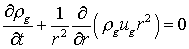 (1) (1)
 (2) (2)
where r
is the distance from center,  is the gas density is the gas density  is the gas velocity which obeys is the gas velocity which obeys 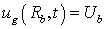 . A
set of solutions satisfying Eqs. (1) and (2) are [24] . A
set of solutions satisfying Eqs. (1) and (2) are [24]
 (3) (3)
 (4) (4)
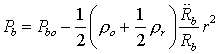 (5) (5)
where 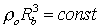 and and  . .
The constant a is related to the gas mass inside the bubble. With
uniform density and pressure approximation, the violent oscillation of the bubble
formed from the evaporated droplet at the superheat limit could be accounted
[25]. The bubble behavior of a nonsonoluminescencing gas bubble can be
described correctly by the solutions with uniform pressure approximation [23].
However, the gas pressure inside bubble is no longer uniform if the bubble
wall acceleration exceeds 1012 m/s2. The solutions for
3-D Navier-Stokes equations in spherical symmetry show that sonoluminescence
occurs due to the rapid increase and subsequent decrease in the bubble wall
acceleration which induces a thermal spike [24,26]. The temperature profile
obtained by the solutions suggests that the light pulse duration is less than
300 ps [26]. Also the solutions have revealed that the Guderley's similarity
solution is not valid just prior to the collapse [26]. In addition correct
spectral behavior of sonoluminescence was obtained by assuming that the
source for the sonoluminescence is bremsstrahlung in partially ionized gases
[24,26]. The shock pulse emanating form a sonoluminescing gas bubble were
calculated [27], measured [28] and the propagation of a pressure wave inside
bubble near the bubble collapse [28,29] have also been calculated by using the
solutions.
It has been found that there always exists a
mismatch between the natural frequency of an oscillator (bubble) and the
characteristic frequency of the applied ultrasound, so that a proper choice
of time scale of the driving force is crucial for the calculation of the
bubble behavier under ultrasound [30,31]. It has also been found
experimentally that the upscaling of SBSL cannot be achieved at low
frequencies of ultrasound due to such mismatch [32]. An artificial resonance
may occur in the course of numerical evaluation of the equation for bubble
motion under ultrasound if the bubble motion is forced to be in phase with
the characteristic frequency of the driving force. Two time normalization
method [30] was introduced to avoid the artificial resonance. Of course the
two time normalization method introduced by us is a physical approximation
which represents lagging behavior of bubble motion under ultrasound. Such
relaxational motion of bubble, which is typical for nonlinear oscillators [33],
turns out to be due to the combined effect of surface tension and viscosity
of liquid. This method enables to explain why a sonoluminescing air bubble
can be maintained at partial pressure of about 0.03~0.14 atm [34] and why the
sonoluminescing air bubble can be stable at the driving pressure of 1.45 atm
[35].
Recently, our theory predicts that extremely
high temperature above million degree might be achieved from a submicron
sonoluminescing gas bubble driven at 1 MHz [36]. This happens because the
submicron bubble driven at MHz frequency can be stable even at higher driving
pressure above 10 atm [36]. Even our theoretical model predicts correctly the
nonlinear behavior of bubble in sulfuric acid solutions, which shows two
states of bubble motion [37] and the characteristics of a sonoluminescing gas
bubble such as the peak pressure and temperature and the flash width [38] in those
solutions. Our theory will be used as a tool for optimum design of sonochemical reactors. [39]
Exact solution of the cosmological fluid
equations for Newtonian stars, which yields many fruitful results such as
stellar stability, spherical oscillation and gravitational collapse [40] was
obtained by using the linear velocity profile given in Eq. 4. The velocity
profile obtained shows homologous character of the gases inside the sphere:
every mass point during the collapse or expansion may be traced back to a
single point. Furthermore, the exact solution yields to calculate central
densities, pressures and temperatures of the Newtonian stars such as the Sun,
Jupiter and the Saturn [41]. Our calculation results may be applicable to the
formation of protostars. Using these exact solution of the cosmological fluid equations, fire-ball expansion and subsequent shock wave propagation by detonation of explosives were studied recently [42].
Experimental works on the single bubble
sonoluminescence(SBSL) have also been done at PCL. It has been found that a
selective bifurcation instead of period doubling occurs when the driving
pressure is increased and the bubble gains extreme stability (SL state) after
the cascade occurrence of such bifurcation [43]. Accurate measurement of the
radius of a sonoluminescing gas bubble by light scattering method and direct
imaging technique was tried [44] by using the remarkable stability of
sonoluminescing gas bubble having the same shape variation sequence in every
oscillation cycle and having only 50 ps jitter in the time flashes. Such SBSL
characteristics enable to measure the bubble radius by the light scattering
method and direct imaging tenique sequentially. The spectrum from SBSL was
measured and the observed results were compared with the results by the
theory proposed [24,26]. Calculated and experimental results yield common
spectral behavior in the visible region : the spectral radiance shows
power-law dependence on wavelength with an exponent of -2.5 [45].
Recently we have succeded in measuring the pulse width from the sonoluminescing gas bubble in sulfuric acid solutions [46] and glycerin-water mixtures [47], where the SL bubble is extremly unstable. The measured values of the pulse widht were found to be in the range of 150 ps to several ns [46,47]. No appreciable difference in the measured pulse width [48] and the bubble behavior [49] for the sonoluminescing air bubble in various solutions was found. The measured results for the pulse width of sonoluminescence in various solutions whose density varied from 1000 kg/m3 to 1800 kg/m3 suggest that light is emitted from the core region where the temperature is almost uniform [47].
Application of sonoluminescence phenomena such
as possibility of bubble fusion and the chemical reaction enhanced by
multibubble sonoluminescence are underway. For example, degradation of
Methylene blue, a typical textile dyestuffs in aqueous solution was examined
for the first time at the multibubble sonoluminescence (MBSL) condition [50].
At the optimum condition of MBSL, the solution was degradated completely.
Recently, uniform coating on CdS particles on TiO2 nanoparticles[51]
was succeeded through a one pot reaction under MBSL condition. Zinc oxide(ZnO) and ZnO-coated tintanium nanoparticles were synthesized in various alcohol solution[52] at the MBSL condition. Furthermore, Li4Ti5O12(LTO), a powerful anode material for all kids of rechargeable lithium batteries was systhesized by heating the LiOH coated TiO2 nanoparticles prepared at the MBSL condition[53].
We also synthesized the nanoparticles with core/shell structure such as ZnS coating on to TiO2 nanoparticles [54] and PbS coating on TiO2 nanoparticles [55] at the MBSL condition. Specially we prepared the supported Ni catalysts with core/shell structure at the MBSL condition and found that 10% Ni Ni/Al2O3 catalysts of core/shell structure produced good conversion efficient of CH4, which is about 96% at reaction temperature of 800℃ and showed good thermal stability [56]. With the supported Ni catalysts Ni/Al2O3 and Ni/MgO-Al2O3 synthesized at the MBSL conditions, the methane conversion of 97% in steam reforming reation at 750 ℃ [57] and 95% in dry (CO2) reforming reaction at 800℃ [58] were achieved for the first 150h. A test for the mixed reforming of methane with these catalysts was also done [59]. Recently, the pulse width from a bubble cloud under MBSL conditions was measured for the first time [60]. The observed pulse width which appears to be comparable to that of the single bubble sonolunimescence indicates that the cloud of bubbles collapse simultaneously to emitting a light that is synchronized with th applied ultrasound.
Based on this observation, MBSL is studied hydro-dynamically to obtain
the velocity profile and radiation pressure field by solving the continuity and
momentum equations for a spherical cluster containing numerous microbubbles[61]. Molecular dynamics simulation for the sonoluminescing gas bubble [62] with
ten million molecules is in progress with supercomputer facility at KISTI
(Korea Institute of Science and Technology Information), Daejon, Korea. An appropriate boundary condition at the bubble wall was found to be one of important factor to simulate the sonoluminescing bubble by molecular dynamics [63].
[23]
Ho-Young Kwak and Hyup Yang, "An aspect of sonoluminescence from
hydrodynamic theory," Journal of Physical Society of Japan, Vol. 64, pp.
1980-1992, 1995.
[24]
Ho-Young Kwak and Jung Hee Na, "Hydrodynamic solutions for a
sonoluminescing gas bubble," Physical Review Letters, Vol. 77, pp.
4454-4475, 1996.
[25]
Ho-Young Kwak, Si-Doek Oh and Cheon-Ho Park, "Bubble dynamics for the
evolving bubble formed from the droplet at the superheat limit,"
International Journal of Heat Mass Transfer, Vol. 38, pp. 1709-1718, 1995.
[26]
Ho-Young Kwak and Jung Hee Na, Physical process for single bubble
sonoluminescence," Journal of Physical Society of Japan, Vol. 66, pp.
1101-1110, 1997.
[27]
Yoon-Pyo Lee, Sarng-Woo Karng, Jin-Seok Jeon and Ho-Young Kwak, "Shock
pulse from a sonoluminesceing gas bubble," Journal of Physical Society
of Japan, Vol. 66, pp. 2537-2540, 1997.
[28] Sarng
Woo Karng, Yoon Pyo Lee, Ki Young Kim, and Ho-Young Kwak, "Implosion
mechanism for a sonoluminescing gas bubble," Journal of the Korean Physical
Society, Vol. 43, pp. 135-144, 2003.
[29]
Ho-Young Kwak, Yoon-Pyo Lee and Sarng-Woo Karng, Pressure wave propagation
inside a sonoluminescing gas bubble," Journal of Physical Society of
Japan, Vol. 68, pp. 705-708, 1999.
[30]
Ho-Young Kwak, Joong-Yeob Lee and Sarng Woo Karng, "Bubble dynamics for
single bubble sonoluminescence," Journal of Physical Society of Japan,
Vol.70, pp.2909-2917, 2001.
[31] Sarng
Woo Karng and Ho-Young Kwak, "Relaxation behavior of microbubbles in
ultrasonic field," Japanese Journal of Applied Physics, Vol. 45, pp.
317-322, 2006.
[32]
Jin-Seok Jeon, Joong-Yeob Lee and Ho-Young Kwak, "Possibility of upscaling for single
bubble sonoluminescence at a low driving frequency", Journal of Physical
Society of Japan, Vol.72, pp. 509-515, 2003.
[33] Sarng
Woo Karng, Ki Young Kim, and Ho-Young Kwak, "Lagging motion of forced
nonlinear oscillators," Journal of Sound and Vibration, Vol. 287, pp.
117-128, 2005.
[34]
Jung-Hee Na, Gi-Taek Byun, and Ho-Young Kwak, 'Diffusive stability for a
sonoluminescing gas bubble," Journal of the Korean Physical Society,
Vol. 42, pp. 143-152, 2003.
[35] Ho-Young
Kwak, Sarng-Woo Karng and Yoo-Pyo Lee, "Rayleigh-Taylor instability on
sonoluminescing gas bubble," Journal of the Korean Physical Society,
Vol. 46, pp. 951-962, 2005.
[36]
Ki-Taek Byun, Sarng Woo Karng, Ki Young Kim and Ho-Young Kwak,
"Sonoluminescence characteristics from micron and submicron size
bubbles," Journal of the Korean Physical Society, Vol. 47, No. 6, 2005.
[37] Ki
Young Kim and Ho-Young Kwak, “Prediction of bubble behavior in sulfuric acid
solutions by a set of solutions of Navier-Stokes equations,” Chemical Engineering Science, Vol. 62, pp. 2880-2889, 2007.
[38] Ki
Young Kim, Ki-Taek Byun and Ho-Young Kwak, “Characteristics of sonolunescing bubbles
in aqueous solutions of sulfuric acid,” Journal of Physical Society of Japan, Vol.
75, No. 11, 2006.
[39] Ki
Young Kim, Ki-Taek Byun, and Ho-Young Kwak, “Temperature and pressure fields due to collapsing bubble under ultrasound," Chemical Engineering Journal, Vol. 131/132, pp. 125-135, 2007.
[40]
Jung Whan Jun and Ho-Young Kwak, "Gravitational collapse of Newtonian
stars", International Journal of Modern Physics D, Vol. 9, pp. 35-42,
2000.
[41]
Ho-Young Kwak and Jung Whan Jun, "Hydrodynamics and thermodynamics of
Newtonian stars," Geophys. Astrophys. Fluid Dynamics, pp. 1-14. 2003.
[42] Ho-Young Kwak, Ilgon Ko and Ki-Moon Kang, “Expanding of fire-ball and subsequent shock wave propagation by detonation of explosives," International Journal of Thermal Sciences, Vol. 59, pp. 9-16, 2012..
[43]
Byung-Rock Kim, Jin Seok Jeon and Ho-Young Kwak, "Stability and
selective bifurcation for a gas bubble oscillating under ultrasound",
Journal of Physical Society of Japan, Vol. 68, pp. 1197-1204, 1999.
[44]
Jin-Seok Jeon, Ik-Jun Yang, Sarng Woo Karng and Ho-Young Kwak, "Radius
measurement of a microbubble oscilliating under ultrasound", Japanese
Journal of Applied Physics, Vol.39, pp. 1124-1127, 2000
[45]
Jin-Seok Jeon, Ik-Jun Yang, Jung Hee Na and Ho-Young Kwak, "Radiation
mechanism for a single bubble sonoluminescence," Journal of Physical Society
of Japan, Vol. 69, pp. 112-119, 2000.
[46] Jin-Seok Jeon, Chansoo Lim and Ho-Young Kwak, "Measurement of pulse width of sonoluminescing gas bubble in sulfuric acid solution," Journal of the Physical Society of Japan, Vol. 77, Paper # 033703, 2008.
[47] Chansoo Lim, Jin-Seok Jeon and Ho-Young Kwak, " Pulse width measurements for sonoluminescing gas bubble in various solution," Europhysics Letters, Vol. 86, Paper # 17002, 2009.
[48] Jin-Seok Jeon, Chansoo Lim, Ilgon Ko and Ho-Young Kwak, " Pulse width measurement of sonoluminescing air bubble in various solution using a time-correlated single photon counting technique," Submitted for publication, 2009.
[49] Chansoo Lim, Jeong Eun Kim, Jae Young Lee and Ho-Young Kwak, " Nonlinear behavior of micro bubble under ultrasound due to heat transfer," Journal of Mechnical Science and Technology, in press, 2009.
[50]
Ki-Taek Byun and Ho-Young Kwak, "Degradation of Methylene blue under
multibubble sonoluminescence," Journal of Photochemistry and
Photobiology, Vol. 175, pp. 45-50, 2005.
[51] Seong
Soo Lee, Kook Won Seo, Seok Hwan Yoon, Il-Wun Shim, Ki-Taek Byun and Ho-Young
Kwak, "CdS coating on TiO2 nanoparticles under multibubble
sonoluminescence condition," Bulletin of the Korean Chemical Society,
Vol. 26, pp. 1579-1581, 2005.
[52] Ki-Taek Byun, Kook Won Seo, Il-Wun Shim, and Ho-Young Kwak," Syntheses of ZnO and ZnO-coated nanoparticles in various alcohol solutions at multibubble sonoluminescence (MBSL) condition, Chemical Engineering Journal, Vol. 132, pp. 125-135, 2007.
[53] Seung Soo Lee, Ki-Taek Byun, Jong Pil Park, Sin Kyu Kim, Ho-Young Kwak, and Il-Wun Shim, "Preparation of Li4Ti5O12 nanoparticles by a simple sonochemical method," Dalton Transations, Vol. 37, pp. 4182-4184, 2007.
[54] Seung Soo Lee, Ki-Tack Byun, Jong Pil Park, Sin Kyu Kim, Joung Chan Lee, Suk-Kyu Chang, Ho-Young Kwak and Il-Wun Shim, " Homogeneous ZnS coating onto TiO2 nanoparticles by a simple one pot sonochmical method," Chemical Engineering Journal, Vol. 139, pp. 194-197, 2008.
[55] Sin Kyu Kim, Seung Soo Lee, Jong Pil Park, Jae Young Park, kang Min Ok, Ho-Young Kwak and Il-Won Shim," Coating of TiO2 nanoparticles with PbS- thin films and preparation of PbS nanoparticles using a one-pot sonochemical reaction," Thin Solid Films, Vol. 517, pp. 6663-6665, 2009.
[56] Hyo Won Kim, Ki Moon Kang and Ho-Young Kwak, " Preparation of supported Ni catalysts with a core/shell structure and their catalytic tests of partial oxidation of methane," International Journal of Hydrogen Energy, Vol. 34, pp. 3351-3359, 2009.
[57] Hyo-Won Kim, Ki-Moon Kang, Ho-Young Kwak and Jong Hyun Kim, “Preparation of supported Ni catalysts on various metal oxides with core/shell structures and their tests for steam reforming of methane," Chemical Engineering Journal, Vol. 168, pp. 775-783, 2011.
[58] Ki-Moon Kang, Hyo-Won Kim, Il-Wun Shim and Ho-Young Kwak, “Catalytic test of supported Ni catalysts with core/shell structure for dry reforming of methane," Fuel Processing Technology, Vol. 92, pp. 1236-1243, 2011.
[59] Ki-Moon Kang, Il-Wun Shim and Ho-Young Kwak, “Mixed and autothermal reforming of methane with supported Ni catalysts with a core/shell structure," Fuel Processing Technology, Vol. 93, pp. 105-114, 2012.
[60] Ilgon Ko and Ho-Young Kwak, “Measurement of pulse width from a bubble cloud under multibubble sonoluminescence conditions," Journal of the Physica Society of Japan, Vol. 79, Paper No. 124401, 2010.
[61] Shahid Mahmood, Yungpil Yoo, Jaekyoon Oh, Ho-Young Kwak, “Hydrodynamic
approach to multibubble sonoluminescence,” Ultrasonics Sonochemistry, Vol. 21,
pp. 1512-1518, 2014.
[62] Ki
Young Kim and Ho-Young Kwak, and Jong Hyun Kim, “Molecular dynamics simulation of collapsing phase for asonoluminescing gas bubble in sulfuric acid solutions : A comparative study with theoretical results”, Journal of Physical Society of Japan, Vol. 76, Paper #024301, 2007.
[63] Ki Young Kim, Chansoo Im, Ho-Young Kwak, and Jong Hyun Kim, "Validation of molecular dynamics simulation for a collapsing gas bubble," Molecular Physics, Vol. 106, pp. 967-975, 2008.

|
|
 Exergy and Thermoeconomic Analyses for Thermal Systems Exergy and Thermoeconomic Analyses for Thermal Systems
A
general exergy balance equation [64] and the corresponding
cost-balance equation [65] that are applicable to
any component of thermal systems have been formulated. The exergy of material stream involved in the component of
any thermal system was decomposed into thermal, mechanical and chemical exergy flows and an entropy-production flow. A unit exergy cost is assigned to each disaggregated exergy in the stream at any state. This methodology
permits us to obtain a set of equations for the unit costs of various exergies by applying the cost-balance equation to each
component of the system and to each junction. The monetary evaluations of
various exergy costs as well as the production cost
of thermal system are obtained by solving the set of equations. The lost
costs of each component of the system can also be obtained by this method.
Application to a 1000 kW gas turbine cogeneration system show that the
unit exergy costs increase as the production
process continues and that the production cost of electricity increase nearly
proportional with the input cost [66].
The
application of the proposed exergy and thermoeconomic analyses to 500-MW combined cycle plant [67]
has revealed that the model provides the productive structure of the system
considered, consequently could visualize the cost formation process and the
productive interaction between components clearly. In the analyses, it has
been found that the exergy and cost balance
equations for the plant boundary play a crucial role for the determination of
the production costs. A comparative study of thermoeconomic
methodologies between the SPECO(Specific Cost)
methodology proposed by Professor G. Tsatsaronis
and our MOPSA(Modified Productive Structure Analysis)
for the predefined CGAM cogeneration system has been done [66]. It has also
been found that the unit cost of products is dependent on the chosen level of
aggregation of the system only when one consider the entropy production
rate as one of parameters to determine the unit cost of products, which
suggest that the cost structure of energy system is interrelated by the irreversibilities occurred at each component [68,69].
Recently exergetic and thermoeconomic
analysis were also performed for a 200-kW phosphoric acid fuel cell plant by
using MOPSA and was found that the system might be viable economically when
the initial investment cost per power is reduced to the level of the gas
turbine co-generation plant of 1500 $/kW [70]. Recently optimal configuration
and optimal operation condition of the cogeneration plant [69] and the
economic evaluation of the plant [72] were determined by considering annual
energy demand pattern of commercial building such as hotels and hospitals and
apartments[73]. Recently thermoeconomic analysis was performed for the high-temperature gas-cooled reactors coupled with a steam methane reforming plant in order to estimate the hydorgen production cost [74].
Recently, optimal operation of
PEMFC-based CHP system [75], a support strategy for the promotion of
photovoltaic uses in Korea [76] and thermoeconomic analysis of ground-source
heat pump system [77] were published with collaboration of researchers in Blue
Economy Strategy Institute Co. Ltd. in Seoul Korea. Recently, a cost-effective method for integration of existing grids with
new and renewable energy sources in public buildings in Korea was suggested
[78]. A key factor of the method is based on the fact that the unit costs of
the products from the energy systems depends on the capacity factor or the
utilization factor which is crucially dependent on the interaction between the
energy demand pattern for the building and the production time of the specific
energy from the new and renewable energy sources
[64] Si-Doek Oh, Hyo-Sun Pang, Si-Moon
Kim and Ho-Young Kwak, "Exergy analysis for a
gas turbine cogeneration systems," Journal of Engineering Gas Turbines
and Power, Vol. 118, pp. 782-791, 1996.
[65]
Si-Moon Kim, Si-Doek Oh, Yong-Ho Kwon and Ho-Young
Kwak, "Exeroeconomic analysis for thermal
systems," Energy, Vol. 23, pp. 393-406, 1998.
[66]
Yong-Ho Kwon, Ho-Young Kwak, Si-Doek Oh, "Exergoeconomic analysis of gas turbine cogeneration
systems," Exergy; Int. J., Vol.1, pp.31-40,
2001.
[67]
Ho-young Kwak, Duck-Jin Kim and Jin-Seok Jeon, "Exergetic and thermoeconomic analysis of power plant," Energy,
Vol. 28, pp. 343-360, 2003.
[68]
Ho-Young Kwak, Gi-Taek Byun,
Yong-Ho Kwon and Hyup Yang, "Cost structure of
CGAM cogeneration system," International Journal of Energy Research,
Vol. 28, pp. 1145-1158, 2004.
[69] Ho-Young Kwak, Ki-Moon Kang, "Sensitivity analysis of component efficiencies on perfomance of a gas turbin cogeneration system," International Journal of Exergy, Vol. 9, pp. 337-345, 2011.
[70]
Ho-Young Kwak, Hyun-Soo Lee, Jung-Yeul Jung, Jin-Seok Jeon and Dal-Ryung Park, "Exergetic and thermoeconomic
analysis of a 200-kW phosphoric acid fuel cell plant," Fuel, Vol. 83,
pp. 2087-2094, 2004.
[71] Si-Doek Oh, Ho-Jun Lee, Jung-Yeul
Jung and Ho-Young Kwak, “Optimal planning and economic evaluation of small
scale cogeneration system," Energy, Vol. 33, pp.760-771, 2006.
[72] Si-Doek Oh, Hoo-Suk Oh and
Ho-Young Kwak, “Economic evaluation for adoption of cogeneration system,"
Applied Energy, Vol. 84, pp.266-278, 2007.
[73] Hyon Uk Seo, Jinil Sung, Si-Doek Oh, Hoo-Suk Oh, and Ho-Young Kwak, "Economic optimization of a cogeneration system for apartment houses in Korea," Energy and Buildings,Vol. 40, pp. 961-967, 2008.
[74] Duk Jin Kim, Jong Hyun Kim, K.F.Barry and Ho-Young Kwak, "Thermoeconomic analysis of high-temperature gas-cooled reactors with steam methane reforming for hydrogen production," Nuclear Technology, Vol. 176, pp. 337-351, 2011.
[75] Si-Doek Oh,
Ki-Young Kim, Shuk_Bum Oh and Ho-Young Kwak, “Optimal operation of a 1-kW
PEMFC-based CHP system for residential applications,” Applied Energy, vol. 95,
pp. 93-101, 2012.
[76] Si-Doek Oh, Yeji Lee, Yungpil Yoo, Jinoh kim,
Suyong kim, Seung Jin Song and Ho-Young Kwak, “A support strategy for the
promotion of photovoltaic uses for residential houses in Korea,” Energy Policy,
vol. 53, pp. 248-256, 2013.
[77] Ho-Young Kwak, Yungpil Yoo, Si-Doek Oh and
Ha-Na Jang, “Thermoeconomic analysis of ground-source heat pump systems,”
International Journal of Energy Research, Published online in Wiley Online
Library, 2013.
[78] Si-Doek Oh, Yungpiul Yoo, Jeonghun
Song, Seung Jin Song, Ha-Na Jang, Kwagwon Kim, Ho-Young Kwak, “A cost-effective method for integration
of new and renewable energy systems in public buildings in Korea,” Energy &
Buildings, Vol. 74, pp. 120-131, 2014.
Nucleate Boiling Heat
Transfer / Convective Heat Transfer in Microchannels
The effect of d.c. electric field on nucleate
boiling heat transfer for various refrigerants R11, R113 and FC-72 in
addition to the study on the convective boiling of refrigerant mixture of R11
and R113 [79] was investigated in a single-tube shell/ tube heat exchanger by
using temperature control method of wall superheat [80]. Also the behavior of
bubble under nonuniform electric field produced by
wire electrode was studied by numerical calculation. Proper electrode
configuration, appropriate electric field strength and wall superheat turn
out to be all important factors to enhance the nucleate boiling heat transfer
as well as to prevent reducing the electric field strength, which should be
considered for electrohydrodynamic (EHD) augmented
evaporator design and its operation [80], It has also been found that the
electrical charge relaxation time of field is an important parameter for the
enhancement of nucleate boiling heat transfer [81]. This can be realized by azeotropic mixture of R113+wt4% ethanol one having very
short charge relaxation time of 0.005ses [82]. A "convective immersion
cooling module" to enhance the the critical
heat flux by increasing the nucleate boiling area in the heat spreader was
developed [83].
An experimental study of thermosyphonic
boiling heat transfer in vertical tube and channel made by two parallel retangular plate with open
periphery was done to understand the effect of the gap size and pumping
action [84]. Also a new thermosyphon cooling module(TSCM)
was designed and fabricated to cool the mult-chip
module(MCM), which can be utilized in the telecommunication system [85]. The
cooling module patented in Korea(# 0211058) and in United States(# 5,859,763, 1999)
consists of a cold plate and an integrated condenser. With an allowable
temperature rise of 56 ℃ on the surface of the heater, the cooling
module TSCM can handle a heat flux of about 2.7 W/cm2 using R11 as
working fluid. More refined cooling module which has smooth transition from
transient to steady state without heat transfer crises at any heat flux level
was tested [86].
For application in thermal control of electronic devices and
bioengineering, the friction factors and the convective heat transfer
coefficients for flow of water and FC-72 in microchannels with rectangular
cross section [87] Recently, proteinaceous bubbles
and nano particles flows in microchannels was
tested to study the macroscopic flow behavior associated with the change in
the state of the microchannels [88]. Recently micro/nano particles and biological cells mixed in water solution were tried to be separated using the dielectrophoresis in an evaporating droplet [89]. For cooling of microelectronic system,
experiments of pool boiling on chemically etched silicon surfaces [90],
capillary pumped loop with cone shaped capillary structure in evaporator [91]
and forced convective heat transfer of nanofluids in microchannels [92] were
performed.
[79] Jae Ho
Hong, Cheon-Ho Park, and Ho-Young Kwak,
"Forced convective boiling in vertical tube for binary refrigerant
mixtures of R11 and R113," KSME International Journal, Vol. 12, pp.
493-503, 1998.
[80] Si-Doek Oh and Ho-Young Kwak, " A study of bubble
behavior and boiling heat transfer enhancement under electric field",
ASME, NE-Vol. 19, Thermal Science of Advanced Steam
Generator/Heat Exchangers, pp. 1-14, 1996, Heat Transfer Engineering, Vol.
21, pp. 33-45, 2000.
[81] Snag-Houn Han, Min-Kyun Na, Si-Deok Oh and Ho-Young Kwak, "Electrohydrodynamic(EHD)
enhancement of boiling heat transfer with a lo-fin tube", KSME International
Journal, Vol. 13, pp. 1999.
[82] Si-Deok Oh, and Ho-Young Kwak, "Electrohydrodynamic
(EHD) enhancement on boiling heat transfer of R113+wt4% ethanol mixture", Journal
of Mechanical Science and Technology (KSME Int. J.), Vol. 20,
pp. 681-691, 2006.
[83] Yong-Sik Yoon, Hyup Yang, and
Ho-Young Kwak, "Enhancement of the critical heat flux by using heat
spreader," KSME International Journal, Vol. 17, pp. 1063-1072, 2003.
[84] Jin-Seok Jeon, Jung Hee Na, Hong Chul Park, and
Ho-Young Kwak, "An experiment on thermosyphon boiling in uniformly
heated vertical tube and asymmetrically heated vertical channel," KSME
International Journal, Vol. 15, pp.98-107, 2001.
[85] Sang-Sig Nam, Sung-Bong Choi, Jae-Hee Kim and Ho-Young Kwak, "Transient characteristics
of a two phase thermosyphon cooling module for multi-chip device", ETRI J. Vol. 20, pp.
284-299, 1998.
[86] Min-Kyun Na, Jin-Seok Jeon, Ho-Young Kwak and Sang-Sig
Nam, "Experimental study on a closed loop two-phase
thermosyphon for cooling MCMs, Heat Transfer Engineering, Vol.22, pp.29-39,
2001.
[87] Jung-Yeul Jung and Ho-Young Kwak, "Fluid flow and heat
transfer in microchannels with rectangular cross section," Heat Transfer Engineering, in press, 2007.
[88] Jung-Yeul Jung, Ki-Taek Byun, and Ho-Young Kwak, "Proteinaceous bubbles and nano particles flows in microchannel," Microfluidics
and Nanofluidics, Vol. 1, pp. 177-182, 2005.
[89] Jung-Yeul Jung, and Ho-Young Kwak, "Separation of micro particles and biological cells inside an evaporating droplet using dielectrophoresis," Analytical Chemistry, Vol. 79, pp. 5087-5092, 2007.
[90] Jung-Yeul Jung and Ho-Young Kwak, "Effect of surface
condition on boiling heat transfer from silicon chip with sub-micron
roughness," International Journal of Heat and Mass Transfer, Vol. 49,
pp. 4543-4531, 2006.
[91] Jung-Yeul Jung, Hoo-Suk Oh, Dae Keun Lee, Kyong Bin Choi, Sang Keun Dong, and Ho-Young Kwak, "A Capillary pumped loop (CPL)
with cone shaped capillary structure for cooling electronic device,"
Journal of Micromechanics and Microengineering, Vol. 18(1) paper #017002.
[92] Jung-Yeul Jung, Hoo-Suk Oh, Ho-Young
Kwak, "Forced convection heat transfer
of nanofluids in microchannels," International Journal of Heat and Mass Transfer, Vol. 52, pp. 466-472, 2009.
Two foreign scholars visited our Phase Change Lab. by BK21 programme. Dr. Sharma P. Mahapatra who stayed from November 2007 to July 2008 works as Chemistry Professor in National Institute of Technology at Rapipur, India. Dr Vijay Singh who stayed from December 2008 to November 2010 now works as HWK Fellow in Institute for Advanced Study at Delmenhorst, Germany. They produced the following excellent works during their stay.
[93] S.P. Mahapatra, V. Sridhar, D.K. Tripathy, J. K. Kim, H. Kwak, “ Dynamic mechanical and dielectric relaxation characteristics of microcellular rubble composites," Polymers for Advanced Technologies, vol. 19, pp. 1311-1322, 2008.
[94]T.T.N. Dang, S.P. Mahapatra, V. Sridhar, J.K. Kim, K-J. Kim, H.Kwak, “Dielectric properties of nanotube reinforced butyl elastomer composites," Journal of Applied Polymer Science, Vol. 113, pp. 1690-1700, 2009.
[95] V. Singh, R.P.S. Chakradhar, J.L. Rao, H. Kwak, “Characterization, EPR and photoluminescence studies of LiAl5O8:Cr phophors," Solid State Sciences, Vol. 11, pp. 870-874, 2009.
[96] V. Singh, M. Tiwari, M. Soni, M. Aynayas, S.-H. Hyun, H. Kwak, V. Natarajan, “Photoluminescence and EPR investigation of combustion synthesized BaAl2O4:Cr3+,” Indian Journal of Pure and Applied Physics, Vol. 47, pp. 449-440, 2009.
[97] V. Singh, V. K. Rai, I. Ledoux-Rak, H. Kwak, “ Visible up-conversion and NIR luminescence of LiAl5O8:Er phosphor co-doped with Yb3+ and Zn2,", Applied Physics B: Lasers and Optics, vol. 97, pp. 103-107, 2009.
[98] V. Singh, V. K. Rai, I. Ledoux-Rak, L. Badie, H. Kwak, “ Visible up-conversion and infrared luminescence investigations of Al2O3 powders doped with Er3+, Yb3+ and Zn2+ ions,", Applied Physics B: Lasers and Optics, vol. 97, pp. 805-809, 2009.
[99] V. Singh, S. Watanabe, T.K. Gundu Rao, J.F.D. Chubaci, I. Ledoux-Rak, H. Kwak, “Infrared luminescence, thermoluminescence and defect centres in Er and Yb doped ZnAl2O4 phosphor," Applied Physics B: Lasers and Optics, vol. 98, pp. 165-172, 2010.
[100] V. Singh, R.P.S. Chakradhar, J.L. Rao, H. Kwak, "Green luminescence and EPR studies on Mn-activated yttrium aluminum garnet phosphor," Applied Physics B: Lasers and Optics, vol. 98, pp. 407-415, 2010.
[101] V. Singh, R.P.S. Chakradhar, J.L. Rao, I. Ko, H. Kwak "Luminescence and EPR studies of Eu2+ doped BaAl12O19 blue light emitting phosphors," Journal of Luminescence, vol. 130, pp. 703-708, 2010.
[102] V. Singh, S. Watanabe, T.K. Gundu Rao, J.F.D. Chubaci, H. Kwak, "Luminescence and defect centers in MgSrAl10O17:Sm3+ phosphor, Journal of Non-Crystalline Solids, vol. 356, pp. 1185-1190, 2010.
[103] V. Singh, V.V. Ravi, Kanth Kumar, R.P.S. Chakradhar, H. Kwak, “ Synthesis characterization and photoluminescence of Eu3+, Ce3+ co-doped CaLaAl3O7 phosphors, Philosophical Magazine, vol. 90, pp. 3095-3105, 2010.
[104]V. Singh, V.K. Rai, S. Watanabe, T.K. Gundo Rao, I. Ledoux-Rak, H. Kwak, "Infrad emission and defect centres in Er and Yb codoped Y3Al5O12 phosphors," Applied Physics A, vol. 100, pp. 1123-1230, 2011.
[105]V.Singh, V.K. Rai, S. Watanabe, T.K. Gundu Rao, I. Ledox-Rak,H. Kwak, "Infrared emissions, visible up-conversion, thermoluminescence and defect centres in Er3Al5O12 phosp,” Applied Physics B , vol. 101, pp. 631-638, 2010. IF: 1.992
[106]V. Singh, S. Watanabe, T.K. Gundu Rao, H. Kwak, "Luminescence and defect centers in Tb3+ doped LaMgAl11O19 phosphors," Solid State Science, vol.12, pp. 1981-1987, 2011. IF:1.675
[107]V. Singh, S. Watanabe, T.K. Gundu Rao, J.F.D. Chubachi, H. Kwak, "Characterization, photoluminescence, thermally stimulated luminescence and electron spin resonance studies of Eu3+ doped LaAlO3 phosphor," Solid State Science, vol.13, pp. 66-71, 2011. IF:1.675
[108]V. Singh, S. Watanabe, T.K. Gundu Rao, H. Kwak, "Synthesis, characterization, luminescence and defect centres in CaYAl3O7:Eu3+ red phosphor," Journal of Fluorescence," Vol. 21, pp. 313-320, 2011
[109]V. Singh, R.P.S. Chakradhar, J.L. Rao, H. Kwak, “Enhanced blue emission and EPR study of LaMgAl11O19:Eu phosphors,” Journal of Luminescence, Vol. 131, pp. 247-252, 2011.
[110]V. Singh, R.P.S. Chakradhar, J.L. Rao, I. Ledoux-Rak, H. Kwak, “Luminescence and EPR studies of Y2O3:Gd3+ phosphors prepared via solution combustion method,” Journal of Materials Science, Vol. 46, pp. 1038-1043, 2011.
[111]V. Singh, R.P.S. Chakradhar, J.L. Rao, H. Kwak, “EPR and photoluminescence properties of combustion-synthesized ZnAl2O4:Cr3+ phosphors," Journal of Materials Science, Vol. 46, pp. 2331-2337, 2011.
[112]V. Singh, R.P.S. Chakradhar, J.L. Rao, H.Kwak, “Invesigation on green-emitting, Mn2+:BaAl12O19 phosphors obtained by solution combustion process,” Journal of Materials Science, Vol. 46, pp. 3928-3924, 2011.
Invited Lectures
1. Invited Lecture at the Spring Meeting of Lorean Society of Mechanical Engineers(KSME); April 24-25, 1998, Jinju(Kyung Sang University) Korea.
Bubble, bebble, toil and trouble :
Sonoluminescence Phenomena and Star Formation
Abstract
The phenomenon og light emission from a oscillating gas bubble trapped in ultrasound field in water, SL, was discussed with spherical symmetry. Also the stability, spherical oscillation and gravitational collapse of Newtonian stars were stars were studied hydrodynamically.
2. Invited Lecture at the
Research Workshop on Nucleation Theory and Applications; April 12-20, 1999,Dubna,Russia.
Cluster
Models in the Theory of Bubble Formation and Related Problems
Abstract
Using a new surface energy
for the formation of the critical cluster, models for the gas bubble
formation in gas-liquid solutions and for the vapor bubble formation within a
liquid under tension are presented in this paper. The energy related to
translational motion of molecule, which is lost during the dissolution
process is considered as the surface energy needed for the gas bubble
formation in solutions. Results from the model show good agreement with
experiments for various gases dissolved in water solutions. On the other
hand, the surface energy needed for the bubble formation is calculated from
theLondon
dispersion force between molecules. Also the vapor bubble formation model
gives a very good prediction of tensile strength of simple liquids as well as
the superheat limit of liquids. In another test of the vapor bubble formation
model, the complete evaporation time of a butane droplet at its superheat
limit is compared with experiments and found to be in good agreement.
Transition from a critical cluster to a critical bubble where surface
formation is needed in process is also discussed.
3. Plenary Speakers at the
Fourth JSME-KSME Thermal Engineering Conference; Oct. 1-6, 2000,Kobe,Japan.
Bubble
Dynamics/Sonoluminescence/Newtonian Stars
Abstract
The sonoluminescence
phenomenon which is the light emission associated with the catastrophic
collapse of a gas bubble oscillating under ultrasound may be understood by
the analytical solutions for the Navier-Stokes
equations in spherical symmetry. Further the homologous solutions of the
Euler equation with Newtonian gravity yield many fruitful results such as
stellar stability, spherical oscillation and collapse of Newtonian stars. All
these results came from an effort to understand the dynamics of a thin
shelled sphere of gas, a tiny bubble.
4. Keynote Lecture at the
Twelfth International Heat Transfer Conference, August 18-23, 2003,Grenoble,France.
Bubble
Nucleation; A Microscopic Phenomenon
Abstract
In this article, vaporous bubble nucleation
in liquid and the evaporation process of a liquid droplet at its superheat limit
were discussed based on clustering process of molecules (molecular cluster
model for bubble nucleation). A puzzling phenomenon of carbon monoxide gas
bubble formation in Fe-C-O melts was also discussed by the cluster model
based on the interaction between solute gas and solvent molecules. For the
vapor bubble formation, the energy barrier against bubble nucleation was
estimated by the molecular interaction due toLondon dispersion force. Bubble nucleation
by quantum tunneling in liquid helium under negative pressure near the
absolute zero temperature and bubble nucleation on micro heaters were also
presented as one of the homogenous nucleation process with the molecular
cluster model.
Review Papers / Books
1. Ho-Young Kwak and Yoon-Pyo Lee, "Shock and thermal waves emanating from a sonoluminescing gas bubble in Shock Focussing
Effect in Medical Science and Sonoluminescence," Edited by R.C. Srivastava, D. Leutloff, K. Takayama and H. Gronig,
Springer, 2003.
Abstract
The generation and
propagation of the shock pulse from a sonoluminescing
gas bubble whose wall acceleration reaches 1012m/s2
near the collapse is considered by using the bubble wall motion developed by Keller
and Miksis in conjunction with the analytical
solutions for the gas inside bubble and the Kirkwood-Bethe hypothesis for the
outgoing wave. The propagation of the pressure wave inside the bubble, where
there are in homogeneous of density, pressure and temperature induced by the
rapid bubble collapse, is also treated. The propagation of a solition-like heat wave which is generated by
"thermal spike" due to the rapid increase and subsequent decrease
in the bubble wall acceleration is also discussed.
2. Ho-Young Kwak,
"Vapor bubble nucleation: a microscopic phenomena," KSME
International Journal, Vol. 18, pp. 1271-1287, 2004.
Abstract
In this article, vapor
bubble nucleation in liquid and the evaporation process of a liquid droplet
at its superheat limit were discussed from the viewpoint of molecular
clustering (molecular cluster model for bubble nucleation). For the vapor
bubble formation, the energy barrier against bubble nucleation was estimated
by the molecular interaction due to theLondon
dispersion force. Bubble nucleation by quantum tunneling in liquid helium
under negative pressure near the absolute zero temperature and bubble
nucleation on cavity free micro heaters were also presented as the homogenous
nucleation processes.
3. Ho-Young Kwak, "Bubbles:
Homogeneous Nucleation," Encyclopedia of Surface
and Colloid Science, 2nd Edition, pp. 1048-1071, CRC Press, 2006.
Abstract
In this article, gas bubble nucleation in gas-supersaturated solutions, vapor
bubble nucleation in liquid and the evaporation process of a liquid droplet
at its superheat limit were discussed from the viewpoint of molecular
clustering (molecular cluster model for homogeneous bubble nucleation) in metastable liquid. A puzzling phenomenon of carbon
monoxide gas bubble formation in Fe-C-O melts and gas bubble nucleation in
polymer solutions were also discussed by using the molecular cluster model
based on the interaction between solute gas and solvent molecules. For the
vapor bubble formation, the energy barrier against bubble nucleation was
estimated from the molecular interaction due to theLondon dispersion force. Bubble nucleation
by quantum tunneling in liquid helium under negative pressure near the
absolute zero temperature, bubble nucleation on cavity free micro heaters, and
the bubble nucleation due to laser irradiation were also presented as the
homogeneous vapor bubble nucleation processes.
Key
words;
bubble nucleation, CO bubble in melts, droplet explosion, evaporation, gas
bubble, laser-induced cavitation, microcellular
foam, molecular cluster, quantum tunneling, superheat limit of liquid,
tensile strength, vapor bubble.
4. Ho-Young Kwak and Si-Doek Oh, "Exergetic and thermoeconomic analyses optimal planning of cogeneration systems" in Energy Efficiency Research Advances, ed. By D.M. Bergmann, Nova Science Publishers, Inc., 2008.
Abstract
Increasing demand in fossil fuels which will remain the dominant energy source to 2030 might cause a drastic change in global climate. To curb such fossil fuels demand and reduce CO2 emissions correspondingly, more efficient use of the fossil fuels are strongly required. In this article thermodynamic and economic evaluation methods and optimal planning of gas turbine cogeneration systems which can return fossil fuel energy savings up to 30% are treated. A general exergy balance equation that is applicable to any component of thermal system is presented. A cost-balance equation formulated by assigning a unit exergy cost to each disaggregated exergy stream in the exergy balance equation is also presented. Applications of the exergy and cost-balance equations to a gas turbine cogeneration are shown. A method to determine the optimal configuration and optimal operation mode of cogneration system is also presented based on the energy demand data for commercial buildings such as a hotel, a hospital and an office building.
5.
Ho-Yong Kwak, “Nonlinear bubble behavior due to heat transfer” in Heat Transfer—Theoretical
Analysis, Experimental Investigations and Industrial Systems, INTECH, 2011.
Abstract
Previous
studies of the forced oscillation of a spherical bubble in solution have been
investigated by using the Rayleigh equation to obtain the time dependent bubble
radius and a polytropic relation to obtain the gas pressure inside the bubble
depending bubble volume. In fact, the polytropic approximation with proper
index values has been widely used for the gas undergoing quasi-equilibrium
process in which there is heat transfer. However, the polytropic pressure-volume
relationship fails to account the thermal damping due to heat transfer through the
bubble wall because PbdV is a perfect
differential and consequently its integral over a cycle vanishes where Pb is the gas pressure inside the bubble and V is the bubble volume. Furthermore, the polytropic approximation
assumes the uniform temperature for the gas intrinsically, which is valid only
for a particular case and it is hard to tell whether the gas inside the bubble
oscillating under ultrasound behaves isothermally or adiabatically.
In this study, we have formulated a general
bubble dynamics model, which is as follows. The density, velocity and pressure
distributions for the gas inside a spherical bubble were obtained by solving
the continuity and momentum equations analytically. With the set of analytical
solutions for the conservation equations, the temperature distribution for the
gas inside the bubble was also obtained by solving the energy equation for the
gas. The heat transfer through the bubble wall was considered to obtain the
instantaneous thermal boundary layer thickness from the mass and energy
conservations for the liquid layer adjacent to the bubble wall by the integral
method. The mass and momentum equations for the liquid outside the bubble wall
provided the well known equation of motion for the bubble wall, the
Rayleigh-Plesset equation in incompressible medium or the Keller-Miksis
equation in compressible medium. The bubble dynamics model was applied to an
evolving bubble formed form the fully evaporated droplet at the superheat limit
and phenomena of sonoluminescence which is light emission associated with the catastrophic
collapse of a micro-bubble oscillation under ultrasound.
With uniform density, temperature and
pressure approximations which are valid for the characteristic time scale of ms,
the calculated values of the far field pressure signal from the evolving the
bubble formed form the fully evaporated droplet at its superheat limit are in
good agreement with the experimental results. With uniform pressure
approximation which is valid for the characteristic time scale of μs, the calculated values of the minimum velocity of the bubble
wall, the peak temperature and pressure are excellent agreement with the
observed ones for the sonoluminescing xenon bubble in sulfuric acid solutions.
Furthermore, the calculated bubble radius-time curve displays alternating
pattern of bubble motion which is apparently due to the heat transfer for the
sonoluminescing xenon bubble, as observed in experiment. The bubble dynamics
model presented in this study has also revealed that the sonoluminescence for
an air bubble in water solution occurs due to the increase and subsequent
decrease in the bubble wall acceleration which induces pressure non-uniformity
for the gas inside the bubble during ns range near the collapse point. The calculated
sonoluminescence pulse width from the instantaneous gas temperature for air
bubble is in good agreement with the observed value of 150 ps. Due to enormous
heat transfer the gas temperature inside the sonoluminescing air bubble at the
collapse point is about 20000~40000 K instead of 107 K which estimated
to be in the adiabatic case. Molecular dynamics (MD) simulation results for the
sonoluminescing xenon bubble were compared to the theoretical predictions and
observed results.
|
|
Refereed Conference Proceedings
[1] Ho-Young Kwak, and Sung-Kap Cho, "Bubble formation, growth, and collapse mechanism from a droplet at the superheat limit", Proceedings of the Fourth Miami International Symposium on Multiphase Transport and Particulate Phenomena,pp.359-375,1986(Miami Beach,Florida, USA).
[2] Ho-Young Kwak, and Sangbum Lee, "Homogeneous nucleation of liquids predicted by a model of molecular interactions", Proceedings of the Fourth Miami International Symposium on Multiphase Transport and Particulate Phenomena, pp. 485-500,1986 (Miami Beach, Florida,USA).
[3] Ho-Young Kwak, and Joon-Hyuk Kim, "A model of laser induced cavitation",Korea-US Seminar on Thermal Engineering and High Technology, pp. 281-295, 1986(Daejon, Korea).
[4] Ho-Young Kwak, and Si-Doek Oh, "Gas -vapor bubble nucleation --- An unified approach", Proceedings of the 1988 National Heat Transfer Conference, vol.2, pp. 557-564, 1988(Houston, USA).
[5] Ho-Young Kwak, and Yong-Won Kim, "Homogeneous nucleation and macroscopic growth of gas bubble in organic solutions, Proceedings of the First KSME-JSME Thermal and Fluid Engineering Conference, vol.1, pp.125-131, 1988(Seoul, Korea)
[6] Jung Hee Na, Jin-Seok Jun, and Ho-Young Kwak, "An experiment on thermosyphon boiling in uniformly heated vertical tube and channel", Proceedings of the 2nd KSME-JSME Fluid Engineering Conference, vol.2, pp. 160-164, 1990(Seoul, Korea).
[7] Ho-Young Kwak, and Si-Doek Oh, "A model of homogeneous bubble nucleation of CO bubble in Fe-C-O melts", Proceedings of the 2nd KSME-JSME Fluid Engineering Conference, vol.2, pp. 177-180, 1990(Seoul, Korea).
[8] Ho-Young Kwak, Si-Doek Oh,and Jae-Ho Hong, "Thermal damping effect on an oscillating bubble in hot incompressible medium, ASME Winter Annual Meeting, ASME Paper 91-WA-HT-2, 1991( Atlanta, USA).
[9] Jei-Cheong Ryu, and Ho-Young Kwak, "Chaotic behavior of the damped bubble oscillation", Proceedings of the Fifth Asian Congress of Fluid Mechanics, pp. 1185-1188,1992(Daejon, Korea).
[10] Yong -Sik Yoon, Hyup Yang, and Ho-Young Kwak, "Enhancement of the critical heat flux from high power heat sources using heat spreader", Proceedings of the 2nd JSME-KSME thermal Engineering Conference, vol.3, pp. 349-353, 1992(Kitakyushu, Japan).
[11] Jei-Cheong Ryu, and Ho-Young Kwak, "Bifurcation phenomena for the damped bubble oscillations in periodically driven pressure fields", in HTD-vol. 214, Bifurcation Phenomena and Chaos in Thermal Convection, pp. 1-8,1992, ASME Winter Annual Meeting(Anaheim,Californai,USA).
[12] Si-Doek Oh, Sam-Sun Seung, and Ho-Young Kwak,"A model of bubble nucleation on a micro line heater", DSC-vol. 40, Micromechanical Systems, pp. 313-328,1992 ASME Winter Annual Meeting(Anaheim, Californaia, USA).
[13] Cheon-Ho Park, Jae-Ho Hong, and Ho-Young Kwak, "Forced convective boiling in vertical tube for binary refrigerant mixtures of R11 and R113", Proceedings of the 6th International Symposium on Transport Phenomena in Thermal Engineering, pp. 105-110,1993(Seoul, Korea).
[14] Si-Doek Oh, Sam-Sun Seung, Sung-Kap Cho, and Ho-Young Kwak, "Actuation mechanism by bubble formation on a micro line heater", DSC-vol.46, Micromechanical Systems, pp. 35-42,1993, ASME Winter Annual Meeting (New Orleans,Louisiana, USA).
[15] Ho-Young Kwak, and Hyup Yang, "Some theoretical aspects of sonoluminescence obtained from a bubble dynamics model", Proceedings of the 3rd JSME-KSME Fluids Engineering Conference, pp.1-6, 1994(Sendai, Japan).
[16] Si-Doek Oh, Hyo-Sun Pang, Si-Moon Kim, and Ho-Young Kwak, "Exergy analysis for a gas turbine cogeneration system", AES-vol.35, Thermodynamics and Design, Analysis, and Improvement of Energy Systems, pp. 241-254,1995, ASME International Mechanical Engineering Congress and Exposition(San Fransisco, California,USA).
[17] Si-Doek Oh, and Ho-Young Kwak, "Electrohydrodynamic(EHD) enhancement on boiling heat transfer of R113+wt 4% ethanol", Proceedings of the 3rd KSME-JSME Thermal Engineering Conference, vol.I, pp.407-414,1996(Kyongju, Korea).
[18] Yoon Pyo Lee, Kong Hoon Lee, Sang Hoon Han, and Ho-Young Kwak, "Heat transfer characteristics of a horizontal evaporator-condenser heat exchanger with noncondensable gas", Proceedings of the 3rd KSME-JSME Thermal Engineering Conference, vol.III, pp.157-162,1996(Kyongju, Korea).
[19] Si-Doek Oh, and Ho-Young Kwak, "A study of bubble behavior and boiling heat transfer enhancement under electric field", NE-vol. 19, Thermal Science of Advanced Steam Generator/Heat Exchangers, pp. 1-14,1996, ASME International Mechanical Engineering Congress and Exposition(Atlanta,USA).
[20] Sung-Bong Choi, Sang-Sig Nam, Jae-Hee Kim, and Ho-Young Kwak, "Thermal characteristics of two phase thermosyphon cooling module for multi-chip device", PID-vol.2/HTD-vol 338, Advances in Energy Efficiency, Heat/Mass Transfer Enhancement, pp. 33-43, 1996, ASME International Mechanical Engineering Congress and Exposition (Atlanta,Georgia,
USA).
[21] Si-Moon Kim,Si-Doek Oh, Yong-Ho Kwon, and Ho-Young Kwak, "An approach of exergoeconomic analysis of thermal systems",AES-vol.37, Proceedings of the ASME Advanced Energy Systems Division, pp.181-196,1997, ASME International Mechanical Engineering Congress and Exposition(Dallas,Texas,USA).
[22] Sang-Hoon Han, Min-Kyun Na, Si-Doek Oh, and Ho-Young Kwak, "Electrohydrodynamic(EHD) enhancement og boiling heat transfer with a lo-fin tube",HTD-vol.351, Proceedings of the ASME Heat Transfer Division,vol. 1, pp.223-233,1997, ASME International Mechanical Engineering Congress and Exposition(Dallas, Texas,USA).
[23] Yoon Pyo Lee,Sarng Woo Karng, and Ho-Young Kwak, "Heat Diffusion from a sonoluminescing gas bubble,Proceedings of the Eleventh International Heat Transfer Conference, vol.2,pp.39-44,1998(Kyongju, Korea).
[24] Yoon Pyo Lee, Sarng Woo Karng, Jin-Seok Jun, and Ho-Young Kwak, "Implosion from a sonoluminescing gas bubble",Proceedings of the 4th KSME-JSME Fluids Engineering Conference,pp.453-456,1998(Pusan,Korea).
[25] Yong-Ho Kwon,Ho-Young Kwak,and Si-Doek Oh, "Effect of cost change of a component on the production costs in thermal system",AES-vol.38, Proceedings of the ASME Advanced Energy Systems Division, pp.119-132, 1998, ASME International Mechanical Engineering Congress and Exposition(Anaheim,California,USA).
[26] Min-Kyun Na,Jin-Seok Jeon, Ho-Young Kwak, and Sang-Sig Nam, "Analytical and experimental studies on a closed loop two-phase thermosyphon for cooling MCM, Proceedings of the Two-Phase Flow Modeling and Experimentation, pp.553-560,1999(Pisa, Italy).
[27] Jin-SeokJeon, Ik-Jun Yang, Jung-Hee Na, and Ho-Young Kwak, "Radiation mechanism for a single bubble sonoluminescence", HTD-vol364-3, Proceedings of the ASME Heat Transfer Division, pp.1-8,1999,ASME International Mechanical Engineering Congress and Exposition(Nashiville,Tennessee,USA).
[28] Jung-Hee Na,Sung-Kap Cho, and Ho-Young Kwak, "Mass transfer characteristics for a sonoluminescing gas bubble",Proceedings of the Fourth ISHMT-ASME Heat and Mass Transfer Conference ,pp.345-352,2000(Pune, India).
[29] Jin-Seok Jeon, Ik-Jun Yang, Sarng Woo Karng, and Ho-Young Kwak, "Measurement and prediction of radius for a sonoluminescing gas bubble",Proceedings of the 4th JSME-KSME Thermal Engineering Conference, vol.1, pp.325-330(Kobe, Japan).
[30] Pan-Seok Yang, Chan-Goo Kang, Si-Doek Oh, Ho-Young Kwak,Jung-Man Lee, and Yong-Soo Lee, "Development of a simulation program for CNG refueling station", Proceedings of the 7th International Conference and Exhibition on Natural Gas Vehicles, pp.643-650, 2000(Yokohama, Japan).
[31] Duck-Jin Kim, Hyun-Soo Lee, Ho-Young Kwak, and Jae-Ho Hong, "Thermoeconomic analysis of power plants with integrated exergy stream", AES-vol.40,Proceedings of the ASME Advanced Energy Systems Division, pp.393-404,2000, ASME International Mechanical Engineering Congress and Exposition(Orlando, Florida,USA).
[32] Ho-Young Kwak, and Jung-Hwan Jun, "Hydrodynamics and thermodynamics of Newtonian stars", AES-vol.40, Proceedings of the ASME Advanced Energy Systems Division, pp.423-430,2000, ASME International Mechanical Engineering Congress and Exposition(Orlando, Florida,USA).
[33] Ho-Young Kwak, Hyun-Soo Lee, Jin-Seok Jeon, and Dongsoo Lee,"Exergetic and thermoeconomic analysis of a 200-kW Phosphoric acid fuel cell plant", Proceedings of 2001 ASME International Mechanical Engineering Congress and Exposition, Paper #IMECE2001/ AES-23649(pp.1-10),2001 (New York,New York,USA).
[34] Jung-Yeop Lee, Hong-Chul Park, Ho-Young Kwak, and Jin-Seok Jeon, "Bubble nucleation on micro line heaters", Proceedings of 2001 ASME International Mechanical Engineering Congress and Exposition, Paper #IMECE2001/HTD-24215(pp.1-9), 2001 (New York, New York,USA).
[35] Ho-Young Kwak, Jung-Yeul Jung, and Jae-Ho Hong, "Quantum nucleation of bubbles in liquid helium near the absolute zero temperature", Proceedings of the Twelfth International Heat Transfer Conference, pp.531-536,2002(Grenoble, France).
[36] Jung-Yeul Jung, Hong-Chul Park,Ho-Young Kwak,"Bubbble nucleation and growth on surface of rapidly heated micro heaters",Proceedings of the ASME International Mechanical Engineering Congress and Exposition, Paper# IMECE2002-32777(pp.1-7), 2002(New Orleans,LouisianaUSA).
[37] Ho-Young Kwak,Gi-Taek Byun,Yong-Ho Kwon, and Ho-Young Kwak, "Cost structure of CGAM cogeneration system", Proceedings of the ASME International Mechanical Engineering Congress and Exposition, Paper # IMECE-33187(pp.1-8), 2002(New Orleans,Louisiana,USA).
[38] Jung-Yeul Jung, and Ho-Young Kwak, "Fluid flow and heat transfer in microchannels with rectangular cross section", Proceedings of the First International Conference on Microchannels and Minichannels, pp.291-297(Paper # ICMM2003-1032),2003(Rochester,New York,USA).
[39] Jung-Yeul Jung, Ho-Young Kwak, Sarng Woo Karng,and Yoon Pyo Lee, "Forced convective flows in microchannels for cooling electronic devices",Proceedings of the 7th International Heat Pipe Symposium, pp.332-337,2003(Jeju, Korea).
[40] Sarng Woo Karng, Ki Young Kim, and Ho-Young Kwak, "Lagging motion of forced nonlinear oscillators", Proceedings of the ASME International Mechanical Engineering Congress and Exposition, Paper# IMECE2003-43176(pp.1-8), 2003(Washington D.C., USA).
[41] Hong-Chul Park,Gi-Taek Byun,Ho-Young Kwak, and Sung-Kap Cho, "Explosive boiling of liquid droplet at their superheat limits", Proceedings of the ASME International Mechanical Engineering Congress and Exposition, Paper# IMECE2003-41327(pp.1-11), 2003(Washington D.C.,USA).
[42] Jung-Yeul Jung, Ki-Taek Byun, Jae-Ho Hong, and Ho-Young Kwak, "Proteinaceous bubbles and nano particles flows in microchannel", Proceedings of the Second International Conference on Microchannels and Minichannels, pp. 961-966(Paper # ICMM2004-2437), 2004(Rochester,New York, USA).
[43] Sarng Woo Karng, Yoon Pyo Lee, and Ho-Young Kwak, "Rayleigh-Taylor instability mechanism on sonoluminescing bubble", Proceedings of the ASME Heat Transfer/Fluids Engineering Summer Conference,Paper # HT-FED04-56618(pp.1-10), 2004(Charlotte,North Carolina,USA).
[44] Jung-Yeul Jung, and Ho-Young Kwak, "Bubble nucleation and behavior on micro square heaters",International Symposium on Micro/Nanoscale Energy Conversion and Transport 2004, pp.68-70), 2004(Seoul, Korea).
[45] Ki Young Kim, Sung Lin Kang, and Ho-Young Kwak, "Growth of microcellular foams in viscoelastic mediums",Proceedings of the ASME International Mechanical Engineering Congress and Exposition, Paper # IMECE2004-59490(pp.1-8),2004(Anaheim, California,USA).
[46] Ki-Taek Byun, Ki Young Kim, and Ho-Young Kwak, "Sonoluminescence characteristics from submicron size bubble", Proceedings of the Sixth KSME-JSME Thermal and Fluids Engineering Conference,pp. 1-5,2005(Jeju, Korea).
[47] Jung-Yeul Jung, and Ho-Young Kwak, "Novel fabrication and testing of a bubble powered micropump", Proceedings of the 3rd International Conference on Microchannels and Minichannels, Paper # ICMM2005-75015(pp.1-5),2005(Toronto, Canada).
[48] Si-Doek Oh, and Ho-Young Kwak, "Optimal planning of gas turbine cogeneration system based on linear programming", Proceedings of the International Green Energy Conference, Paper # IGEC-1D09(pp.1-7), 2005(Waterloo, Canada).
[49] Ho-Young Kwak, and Si-Doek Oh, "Optimal planning and economic evaluation of small scale cogeneration system", Proceedings of the ASME International Mechanical Engineering Congress and Exposition, Paper # IMECE2005-80685(pp.1-10), 2005(Orlando,Florida,USA).
[50] Ki Young Kim, Ki-Taek Byun, and Ho-Young Kwak, "The mesoscopic simulation on the structures of the surfactant solution using dissipative paticle dynamics", Proceedings of the ASME International Mechanical Engineering Congress and Exposition, Paper # IMECE2005-80702(pp.1-6), 2005(Orlando,Florida,USA).
[51] Jung-Yeul Jung, Hoo-Suk Oh, Dae-Keun Lee, Chang-Bok Ko, and Ho-Young Kwak, "Capillary pumped loop(CPL) with cone shaped capillary structure for cooling electronic device, Proceedings of the Fourth International Conference on Nanochannels,Microchannels, and minichannels, Paper # ICNMM2006-96158(pp.1-5), 2006((Limerick, Ireland).
[52] Ki-Taek Byun, Ki Young Kim, Hoo-Suk Oh, and Ho-Young Kwak, "Prediction of sonoluminescence phenomena in sulfuric acid solutions by a set of solutions of Navier-Stokes equations",Proceedings of the 13th International Heat Transfer Conference, Paper # THP-11(pp.1-9),2006(Sydney, Australia).
[53] Jung-Yeul Jung, Hoo-Suk Oh, and Ho-Young Kwak, "Forced convective heat transfer of nanofluids in microchannels", Proceedings of the ASME International Mechanical Engineering Congress and Exposition, Paper # IMECE2006-13851(pp.1-6), 2006(Chicago, Illinois. USA).
[54] Jung-Yeul Jung, and Ho-Young Kwak, "Separation of micro particles and biological cells inside an evaporating droplet using dielectrophoresis," Proceedings of the Fifth International Conference on Nanochannels, Microchannels and Minichannels, Paper # ICNMM 2007-30018, 2007 (Puebla, Mexico).
[55] Ki Young Kim, Chansoo Lim, Ho-Young Kwak, and Jong Hyun Kim, "Molecular dynamics simulation of collapsing phase for a sonoluminescing submicron and nano bubbles," Proceedings of the Eighteenth International Symposium on Transport Phenomena, pp. 1069-1076, 2007 (Daejeon, Korea).
[56] Hyon Uk Seo, Jinil Sung, Si-Doek Oh, Hoo-Suk Oh, and Ho-Young Kwak, "Economic optimization of a cogeneration system for apartments in Korea," Proceedings of the 2007 ASME International Mechanical engineering Congress and Exposition, Paper # IMECE 2007-43292, 2007 (Seattle, Washington, USA).
[57] Chansoo Lim, Jeong Eun Kim, Jae Young Lee and Ho-Young Kwak," Nonlinear behavior of micro bubbles under ultrasound due to heat trasfer," Proceedings of the 2007 ASME International Mechanical Engineering Congress and Exposition, Paper # IMECE 2007-43294, 2007 (Seattle, Washington, USA).
[58] Ki Young Kim, Chansoo Lim and Ho-Young Kwak, "Molecular dynamics simulation for a sonoluminescing micron bubble with mixed boundary condition", Proceedings of the sixth International ASME Conference on Nanochannels,
Microchannels and Minichannels, Paper # ICNMM 2008-62107, 2008 (Darmstadt, Germany).
[59] Jin-Seok Jeon, Chansoo Lim and Ho-Young Kwak, "Pulse width measurement using a time- correlated single photon counting technique with sonoluminescing air bubble in various
solutions", The seventh JSME-KSME Thermal and Fluids Engineering Conference, Paper # I221, 2008 (Sapporo, Japan).
[60] Ki-Moon Kang, Hyo-Won Kim, Il-Wun Shim and Ho-Young Kwak, "Syntheses of specialty nanomaterials at the multibubble sonoluminescence condition." Proceeding of ASME International Mechanicl. Engineering Congress and Exposition Paper # IMECE 2008-68320, 2008 (Boston, Massachusetts).
[61] Ho-Young Kwak and Ki-Moon Kang, " Gaseous bubble nucleation inder shear flow," Proceedings of the ASME 2009, 7th International Conference in Nachannels, Microchannels and Minichannels, Paper # IMECE 2009-82078, 2009 (Pohang, Korea).
[62] Hyo-Won Kim, Ki- Moon Kang and Ho-Young Kwak, "Syntheses of nano chatalysts at multibubble sonoluminescing condition," Proceeding of the 7th world Conference on Experimental Heat Transfer, Fluid Mechanics and Thermodynamics, pp. 315-322, 2009 (Krakow, Poland).
[63] Ho-Young kwak, Hyo-Won Kim and Ilgon Ko, "Absolute metastable limit of liquids and gas-liquid solutions, Proceedings of AMSE International Mechanical Enginering Congress and Exposition, Paper # IMECE2009-10046, 2009 (Lake Buena Vista, Florida, USA).
[64] Ki-Moon Kang, Hyo-Won Kim and Ho-Young Kwak, "Catalytic test of a supported catalyst Ni/Al2O3 with core/shell structure for dry reforming of methane," Proceedings of 10th International Conference on Clean Energy (ICCE-2010), 2010 (Famagusta, N. Cyprus).
[65]
Ho-Young Kwak, Ki-moon Kang and Ilgon Ko, “Expanding of fire-ball and
subsequent shock wave propagation by explosives detonation in underwater,”
Proceedings of ASME-KSME-JSME Joint Fluids Engineering Conference, 2011
(Hamamatsu, Japan)
[66] Yungpil Yoo, Si_Doek Oh and Ho-Young Kwak,”
Estimation of unit cost of electricity from solar PV and wind power systems in
Korea,” Abstract Book in Asia-Pacific Forum on Renewable Energy 2012, 2012
(Jeju, Korea)
[67] Ho-Young Kwak,
Jaekyoon Oh, Yungpil Yoo, Shahid Mahmood, “Bubble formation on the surface of
laser irradiated nanosized particle”, Proceedings of the 4th ASME
Micro/Nanoscale Heat and Mass Transfer International Conference, 2013 (Hong
Kong, China).
Oral Presentations
[1] R.L. Panton, and Ho-Young Kwak, "Degassing of water-gas solutions after a rapid decompression", Am. Phys.Soc. Fluid Dynamics Meeting , Nov. 1981(New Orleans, Louisiana,USA).
[2] Ho-Young Kwak, "Sound radiation from the evaporating droplet and the growing and collapsing bubble formed from the fully evaporated droplet", 108th Meeting of Acoustical Society of America, J. Acoust.Soc.Am. Suppl. 1, vol.76, S63, 1984(Minneapolis, Minnesota, USA).
[3] Joon-Hyuk Kim, Sangbum Lee, Hyup Yang, and Ho-Young Kwak, "A model of laser-induced bubble formationand collapse mechanism", 112th Meeting of Acoustical Society of America,J. Acoust.Soc.Am.Suppl.1,vol.80,S59,1986(Anaheim,California, USA).
[4] HoYoung Kwak, "Effect of ambient pressure on the pressure wave from the rapidly expanding bubble", 113th Meeting of Acoustical Society of America, J.Acoust.Soc.Am.Suppl.1,vol.81,S26, 1987(Indiannapolis,Indiana, USA).
[5] Ho-Young Kwak, "Homogeneous bubble nucleation", in the Session of "Some Unanswered Questions in Fluid Dynamics", Winter Annual Meeting of ASME,1989(San Fransisco,California, USA).
[6] Jei-Cheong Ryu, and Ho-Young Kwak, "A model of nonlinear oscillation of gas bubble in liquids",122nd Meeting of Acoustical Society of America, J.Acoust.Soc.Am.vol.90, No.4,Pt.2, pp.2317,1991(Houston, Texas, USA).
[7] Hyup Yang, Jei-Cheong Ryu, and Ho-Young Kwak, "Temperature distribution and heat transfer from the pulsating bubble in ultrasonic field",125th Meeting of Acoustical Society of America, J. Acoust. Soc. Am., vol.93,No.4,Pt.2,pp.2383-2384,1993(Ottawa, Canada).
[8] Ho-Young Kwak, Hyup Yang, and Jae-Ho Hong, "An aspect of sonoluminescence from hydrodynamic theory", 128th Meeting of Acoustical Society of America, J.Acoust.Soc.Am., vol.96, No.5, Pt.2, pp.3253,1994(Austin, Texas, USA).
[9] Ho-Young Kwak,and Jung Hee Na, "Hydrodynamics solutions for a sonoluminescing gas bubble",3rd Joint Meeting of Acoustical Societies of America and Japan, J.Acoust.Soc.Am.,vol. 100, No.4,Pt.2,p.2679,1996(Hawaii,USA).
[10] Ho-Young Kwak, "Sonoluminescence phenomena," July 25, 1997, Mechanical Engineering Dept. KAIST(Daejeon, Korea).
[11] Yoon Pyo Lee,Sarng Woo Karng,Jin-Seok Jeon , and HoYoung Kwak, "Shock pulse from sonoluminescing gas bubble", Symposium on Sonoluminescence, September 12-13, 1997(Chicag, Illinois, USA).
[12] Jin-Seok Jeon, Ik-Jun Yang, Sarng Woo Karng , and Ho-Young Kwak, "Radius measurement of microbubble oscillating under ultrasonic field",Microscale Thermophysical Engineering Workshop, August,23,1998(Kyongju, Korea).
[13] Ho-Young Kwak,"Sonoluminescence phenomena and their applications", September, 11,1998, Mechanical Engineering Department, Pohang Institute of Technology.
[14] Yoon Pyo Lee, Sarng Woo Karng,and Ho-Young Kwak,"Thermal waves froma sonoluminescing gas bubble", 135th Meeting of Acoustical Society of America, J.Acoust.Soc.Am. ,vol.103,No.5,Pt.2, pp.3078,1998(Seattle, Washington, USA).
[15] Ho-Young Kwak, Cluster models in the theory of bubble formation and related problems",Research Workshops on Nucleation Theory and Applications, April,1999(Bogoliubov Laboratory of Theoretical Physics at the Joint Institute for Nuclear Research,Dubna, Russia).
[16] Ho-Young Kwak, "Sonoluminescence and bubble fusion", June 25, 1999, Korea Atomic Energy Research Institute (KAERI).
[17] Ho-Young Kwak, "Bubble nucleation via quantum tunneling in liquid helium", February 17, 2002, Micro Thermal System Research Center, Seoul National University.
[18] Ho-Young Kwak, "Bubble nucleation in micro line heaters", February 21, 2002, 2002, Samsung Advanced Institute of Technology.
[19] Ho-Young Kwak, "Sonoluminescence phenomena and bubble fusion", April, 26, 2002, Department of Physics, Pohang Institute of Technology.
[20] Ho-Young Kwak, "Possibility of fusion inside a nano bubble", October, 1, 2002, Department of Nuclear and Quantum Engineering, KAIST.
[21] Ho-Young Kwak, "Bubble nucleation on micro line heaters", March ,20, 2003, School of Mechanical and Aeroapace Engineering, Seoul National University.
[22] Ho-Young Kwak, "Homogeneous bubble nucleation in liquids", Aug, 29, 2003, Department of Physics, Seoul National University.
[23] Ho-Young Kwak, "Sonoluminescence phenomena",China-Korea Symposium on Green Technology, February 11, 2004(Tianjin University,China).
[24] Ki-Taek Byun, and Ho-Young Kwak, "Bubble formation and subsequent shock propagation due to laser irradiation",Micrscale Phase Change Symposium:Tsinghua University and Chung-Ang University,February,12,2004(Beijing, China).
[25] Ho-Young Kwak, Ki Young Kim, and Sung Lin Kang, "Bubble nucleation in polymer solutions",80th Americal Chemical Society, Colloid and Surface Science Symposium, June18-21, 2006(Boulder, Colorado, USA).
[26] Ho-Young Kwak, "Characteristics and applications of sonoluminescence phenomena," Byron Lecture at the University of Texas at Austin, November 16, 2007.
[27] Ho-Young Kwak, "Characteristics and applications of sonoluminescence phenomena, Seminar at the Kyoto University, January, 24, 2008.
[28] Ki Young Kim, Chansoo Lim and Ho-Young Kwak, "Sonoluminescence phenomena in sulfuric acid solutions", 2008 ASME IMECE Micro & Nano Technology Society-Wide Forum, November 5, 2008 (Boston, Massachusetts).
[29] Ho-Young Kwak and Ilgon Ko, "Characteristics of multibubble sonoluminescence," ASME 2010 3rd Joint US-European Fluids Engineering Summer Meeting, August 2, 2010 (Montreal, Canada)
[30] Ho-Young Kwak, "Characteristics and applications of sonolumenescence phenomena,: Seminar at Kyung Hee University, October 16, 2010
|
|
Academic Genealogy of Phase Change Laboratory
A.K. Opprnheim (UC Berkely)
R.L. Panton(Univ. of Texas at Austin)
Ho-Young Kwak
(Chung-Ang University : Degrassing Phenomena from Liquid-Gas Solutions after
Rapid Decompression : May, 1981)
Sung-Kap Cho
(Yuhan College : A Study on the Superheat Limit of Organic Mixtures
: Aug. 1985)
Jei-Cheong Ryu
(Korea Orthopedics and Rehabilitation Research Center : A Study of Nonlinear
Oscillation of a Gas Bubble Immersed in a Liquid
: Feb. 1992)
Jae-Ho Hong
(Osan College : An Experimental Study on Flow Boiling of
Refrigerant Mixtures: Aug. 1992)
Hyup Yang
(Kangwon National University : Sonoluminescence Phenomena: Feb. 1994)
Si-Doek Oh
(Blue Economy Strategy Institute Co., Ltd. : An Experimental Study of EHD Effect on Boiling
Heat Transfer in Evaporator: Feb. 1995)
Jung-Hee Na
(Korea Power Engineering Co. Ltd.: A Thermo-Hydrodynamic Solution for a Sonoluminescing Gas Bubble : Feb. 1998)
Jin-Seok Jeon
(Univ. of Toronto : Experimental Studies on Radius and Spectrum of a Light Emitting
Gas Bubble in an Ultrasonic Field: Feb.2000)
Sarng Woo Karng
(Korea Institute of Science and Technology : A Study on Sonoluminescence Phenomena with Relaxation Motion of Bubble in Ultrasonic Field: Feb.2002)
Sung Lin Kang
(Korea Polytechnic University : Bubble Nucleation and Macroscopic Growth in
Polymer Solutions: Aug.2005)
Ki-Taek Byun
(RouteJJ Co., Ltd. : A Study of Laser-Induced Cavitation, Sonoluminescenceand Their Applications: Feb.2006)
Ki Young Kim
(Samsung SDS : Study of Sonoluminescence in Sulfuric Acid Solutions : Feb.2007)
Jung-Yeul Jung
(Korea Ocean Research & Development Institute : A Study of Heat and Fluid Flow in the Micro Heaters and Microchannels : Feb.2007)
Ki Moon Kang
(Semes Co., Ltd.:Synthesis of Specialty Nano Materials at the Multi-bubble Sonoluminescence Condition and
their Characteristics )

|