제4주 문제정의와 개념화
Week 4. Problem
Identification and System Conceptualization
Problem identification and System Conceptualization
Richardson, chpt 2
Randers, Jorgen. 1980. “Guidelines for Model Conceptualization” In Elements of the System Dynamics Method. (Ed.) Jorgen Randers. MIT Press.
시스템다이내믹스는 문제중심이며 시스템 중심이 결코 아니다
The focus of system dynamics study is not a system, whatever that is, but a problem
변수의 동태적인 행태는 시스템의 구조에서 비롯된다.
Dynamic system behavior comes from system structure
[그림] 시스템다이내믹스 모델링 절차 Overview of System dynamics modeling approach
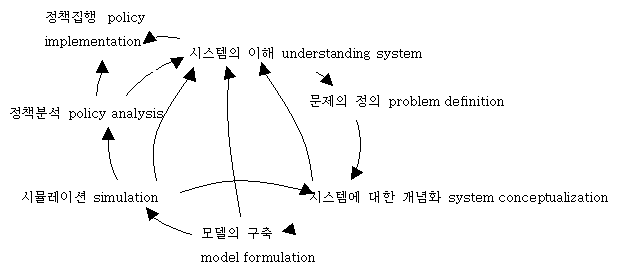
Richardson, 1981:17
Modeling process is a repetitive process and it is a process of trial and error.
Table. The four stages of model construction
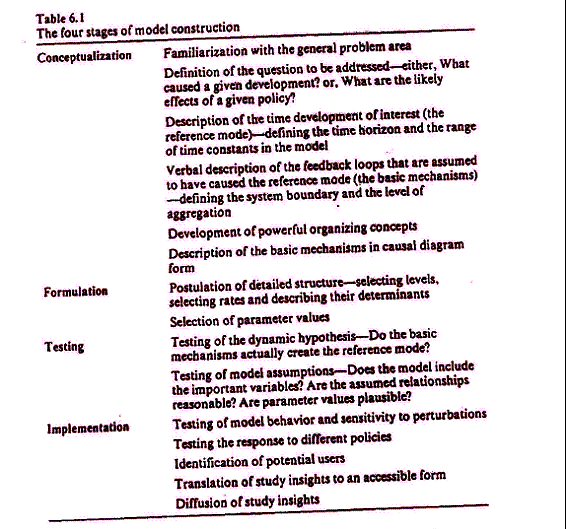
Randers, 119.
문제의 정의와 시스템 개념화 Problem definition and System conceptualization
1) 모델링의 목적을 분명히 할 것 A clear modeling purpose
2) 문제를 모델링하는데 초점을 두되 시스템을 모델링하는데 초점을 두지 말 것
focus on a problem not on a system
1. 문제를 동태적으로 정의할 것 Define problems dynamically
1) 주요한 변수들의 동태적 행태를 그래프로 표시해 볼 것
Describe time development of interest variables and then proceed to identify and describe underlying causes.
Graph important variables over time – symptoms of the problem we want to study
주요 변수들의 시간의 흐름에 따른 동태적 행태를 그래프로 표시해 보면 문제가 보다 명확해 진다
2) 시간의 범위 set the time horizon of study
고려해야 할 시간의 범위가 30년인가 300년인가에 따라 주된 관심의 대상은 크게 달라진다.
예를 들어 천연가스의 생산과 소비 그리고 비용에 관련된 문제에 있어서 고려해야 할 시간 범위가 30년일 경우 정치적 요인, 오일금수조치, 수입, 수출 등에 관심을 쏟아야 하겠으나 만약 시간범위가 300년이라면 오일 금수조치 같은 것들은 단순히 잡음(noise)에 불과하게 된다. 이렇게 긴 시간범위에서는 장기적인 오일탐사, 생산과 소비의 경향, 장기적인 비용문제 등이 주된 관심의 대상이 될 수 있다.
3)준거모드 Reference mode
Graph of behavior of interest variables over time showing its behavior.
This reference mode helps problem definition and conceptualization.
It also can be used as a reference point for model validity test.
If the model reproduce the reference modes identified at the outset, it can be a sign of model validity
주요 변수들의 행태를 시간의 흐름에 따라 동태적으로 그린 그래프
이 준거모드는 시스템 문제의 정의와 개념화 과정을 도와 줄 뿐 아니라, 후에는 모델의 타당도를 실험하는 준거기준이 되어준다.
|
Ex) Richardson, 1981. practice 23-24. no.1-5. |
2. 피드백 구조를 파악할 것 Find feedback structure
Identify and describe the underlying causes of the reference mode
Find interconnections among variables
양의 피드백 루프 Positive feedback loop
음의 피드백 루프 Negative feedback loop
|
Ex) Richardson, 1981. practice 29-30. no.1-4. |
저량변수 stock variable, 유량변수 flow variable
물질흐름 material flow, 정보흐름 information flow
3. 모델의 목적을 분명히 할 것 Clarify model purpose
문제를 모델링 하는 것이지 시스템을 모델링 하는 것이 아니다.
Model is developed to address a specific set of question, not system.
The fundamental purpose of system dynamic model is understanding. The goal of a modeling effort is to improve understandings of the relationship between feedback structure and dynamic behavior of a system so that policies for improving problematic behavior may be developed (Richardson, 1981: 38).
4. 시스템 경계의 설정 System boundary
A imaginary line separating what is considered to be inside the system and what is considered to be outside.
A clear understanding of the purpose of a modeling effort helps to define system boundary, what should be included and what should be excluded.
Any mechanism that is not believed to be a major cause behind the reference mode should be left out of the initial model
시스템 경계내에 포함해야 할 요소들은 연구의 대상이 되는 관심변수의 행태를 유발하는 요인들이며 모델의 단순화를 위하여 가능한 배제하거나 압축시켜야 한다.
1)문제와 관련된 시스템의 물리적인 과정은 어떤 것인가?
What’s the physical process of the system related to the problem?
2)이러한 과정에 대한 인식은 어떠하며 이러한 인식은 어떻게 형성되는가?
How’s the perception of process and how was it formulated?
3)이러한 인식이 물리적인 과정에 어떻게 영향을 주게 되는가?
How does the perception affect physical process?
이상의 요소들은 시스템 경계내에 포함되어야 한다.
과정(process), 인식(perception), 압력(pressure) 이 세가지 요소가 시스템의 개념화 작업에 중요한 가이드라인이 될 수 있다.
문제가 명확히 정의되고, 2)준거모드가 분명히 설정되고, 3)모델의 목적이 분명해지고, 그리고 4)시스템의 경계가 설정되었다면 5)이 문제를 피드백의 시각으로 볼 준비가 된 것이라 할 수 있다.
5. 동태적 가설 (Dynamic Hypothesis)
statement of system structure that appear to have the potential to generate the problem behavior. It can be given verbally or in terms of diagram.
문제가 되는 시스템의 행태를 야기시키는 시스템 구조에 대한 진술
말 또는 다이어그램, 그래프로 표시된다 – 문제의 원인들에 대한 한 개 또는 수개의 진술로 구성된다.
[표] 모델의 구축과 개념화 과정 Model building and conceptualization process
|
모델구축의 개념화 과정 |
설명 |
|
문제의 정의 Problem identification |
문제가 일어나고 있는 상황의 설명과 문제징후와 현상에 대한 설명 explain problem symptom and context of the problem 준거모드의 행태에 입각하여 문제를 동태적으로 정의한다 Define problem dynamically based on reference mode 준거모드 세가지 - Three type of reference model 문제의 동태적 행태 problem behavior 바람직한 시스템의 행태 desirable system behavior 관찰된 정책행태 observed policy behavior |
|
모델목적의 진술 Statement of model purpose |
모델의 수요자가 누구인지, 그리고 이 수요자가 원하는 정책실험이 어떤 것인지를 명확히 밝힐 것 Clarify who is the model audience, what policy experiment the audience want. 그리고 모델을 이용하여 어느 정도의 집행까지 원하는지를 밝힐 것 (교육, 인식의 제고, 실재 정책의 채택과 집행 등) Clarify level of implementation – education, perception, actual application of the policy to the real problem |
|
시스템의 경계 System Boundary |
관심의 대상이 되는 행태를 유도하는 모든 요소들이 포함되어야 한다 include all variables that causes interest behavior |
|
모델 개념화 Model conceptualization |
하향식 접근방식(top-down)으로 대부분 시작 물리적 구조에서 시작하여 정보의 흐름, 인식, 그리고 인식으로부터 야기되는 시스템에 대한 압력의 순으로 개념화 한다 A가 B에 영향을 미친다면 B는 A에 어떻게 영향을 미칠지를 끊임없이 질문할 것 Keep asking how does B impact back to A when A affected B from the start. |
|
동태적 가설 Dynamic hypothesis |
문제시되는 시스템의 행태를 야기한다고 보여지는 피드백구조에 대한 진술 A statement of feedback structures that are conjectured to have the power to contribute to the problem behavior 이 동태적 가설은 모델의 전과정을 통하여 지속적으로 정교화되어 나가는 것이지만 모델의 개념화 단계에서 시작되어야 한다 |
Richardson, 1981:61-63.
문제개념화의 예 Example of Problem
Conceptualization (Richardson, 1981. 45-)
1. 문제 problem
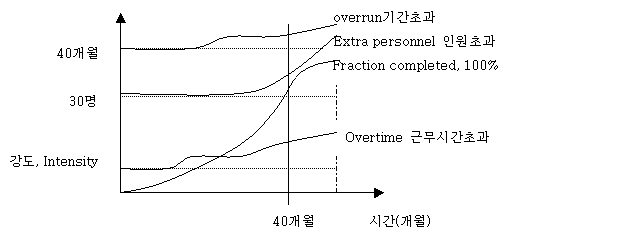
R & D 프로젝트에서 흔히 나타나는 시간, 비용, 인원의 초과문제
1)동태적인 문제정의 Dynamic problem definition
그래프로 문제를 파악한다
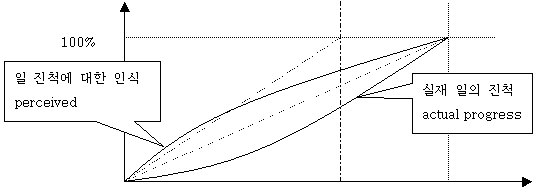
(1)아무런 문제가 없는 R&D의 그래프 : 프로젝트의 시작에서부터 끝까지 프로젝트에 아무런 문제가 없다면 인력과 타임스케쥴은 어떤 형태의 그래프로 나타낼 수 있는가?
(2)문제에 대한 동태적인 정의
아무런 문제가 없는 프로젝트 진행을 가정하는 문제의 동태적 정의
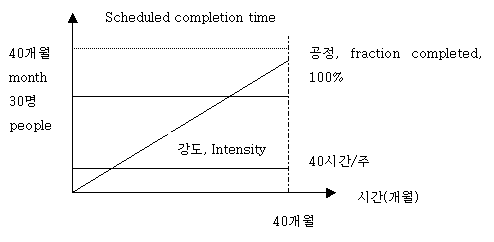
예정인원이 초과되고 마감기간이 연장되는 것을 가정한 문제의 동태적 정의
일진척에 대한 인식과 실재 일 진척간의 차이로 인한 프로젝트의 문제
40개월 시간(개월)
2. 모델의 목적과 수요자 (model purpose and audience)
이 경우 모델의 수요자는 대규모 R&D 프로젝트의 책임관리자로 각종 초과시간, 비용, 인력을 최소화하는데 관심을 가지고 있음.
People responsible for the management of large R&D projects. They wish some guidance to prevent or minimize overrun.
3. 프로젝트 관리에 대한 피드백 시각 (인과지도의 구축)
Feedback perspective on project management
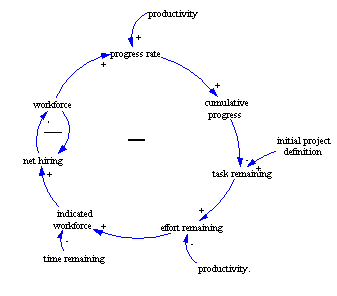
개념화 작업은 시스템의 물리적 과정에서부터 시작하는 것이 유리하다.
It is easy to start system conceptualization from the physical process of the system
[그림] 프로젝트모델 인과지도 (Richardson, 1981:60)
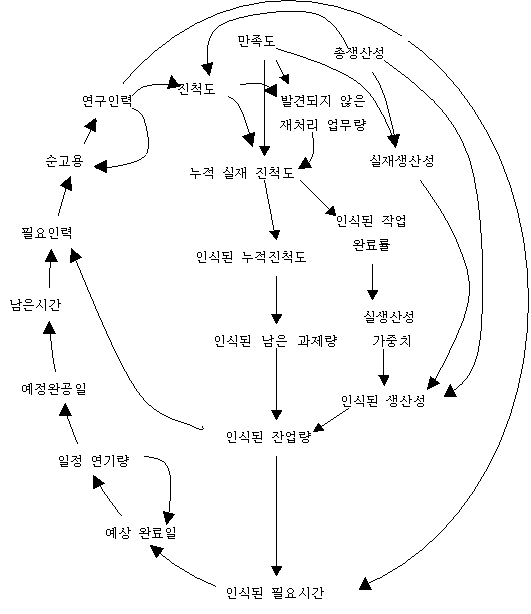
<Fig> Complete structure of a simple project model
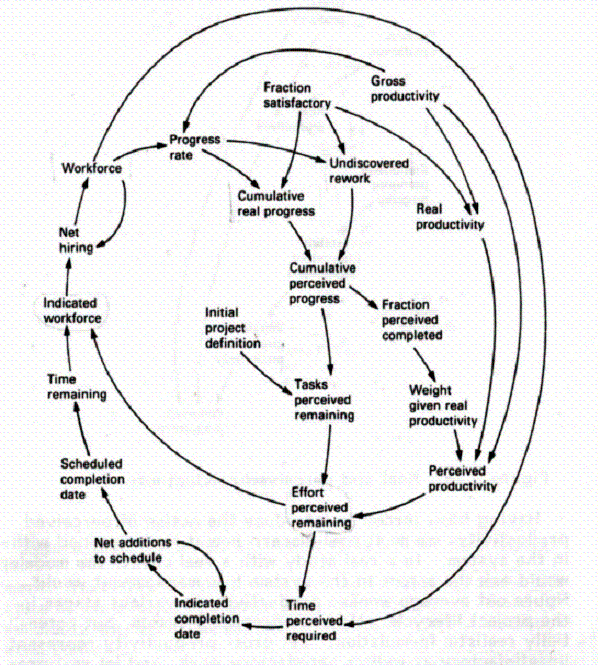
Richardson. 1981. p.60.
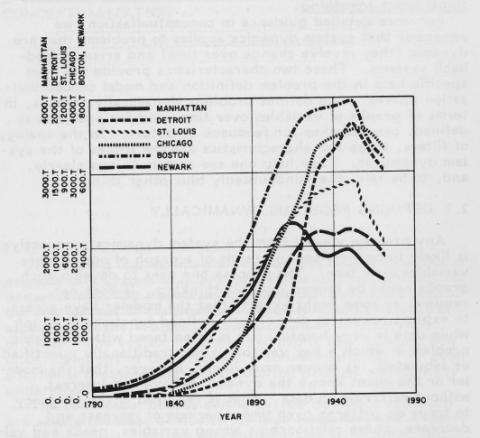
Ex. Urban Dynamics
1. Dynamic problem definition
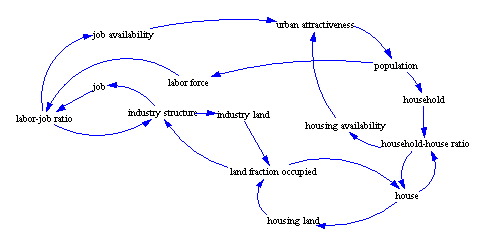
2. Dynamic hypothesis
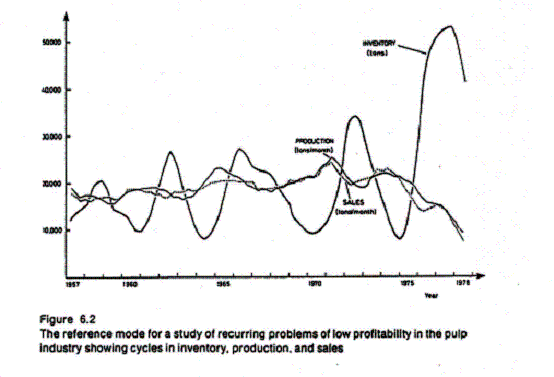
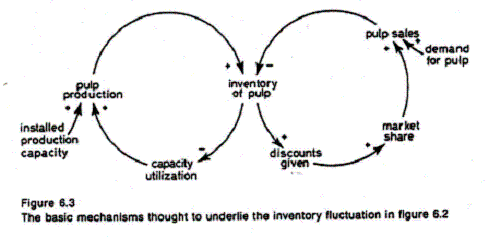
Reference mode for a low profitability of Norwegian pulp industry using time series data
Dynamic hypothesis
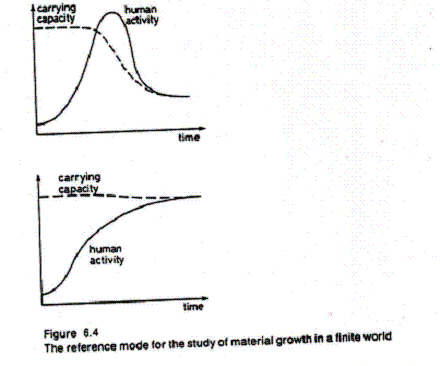
Reference mode for the study of material growth in a finite world
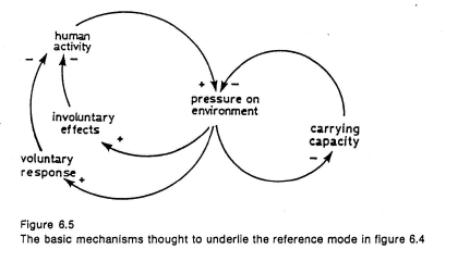
Dynamic hypothesis