Hearing and Ear Research:

  • The cochlea in the inner ear is the principal sensory organ of mammalian auditory system. Sound pressure waves reaching the inner ear displace the basilar membrane (BM) in cochlea in a transverse direction. In order to investigate the BM motion due to a complex sound, we used a two dimensional cochlear model which couples the movement of BM described by a second order partial differential equation and a discrete feed-forward outer hair cell (OHC) model. The OHCs are known to be responsible for ear's sensitivity and nonlinear behaviors of cochlear dynamics. Our computational result exhibits many well known behaviors of cochlear dynamics in a qualitative agreement with observed experimental data.

    As an application of the cochlear model, We have proposed and studied a model based sound amplification method to enhance the ability of the hearing impaired. The higher level auditory processing is accounted for as a lumped effect by defining a perceptive correction. The amplifications for the impaired ear are computed by matching the impaired model output to the perceptively weighted normal output, and a qualitative agreement is achieved with a well-known prescription method NAL-NL1 on clean signals. Even for noisy signals, an adaptive gain strategy is proposed based on the signal to noise ratios (SNR) computed by the model.

  • Motion of Basilar Membrane (BM)

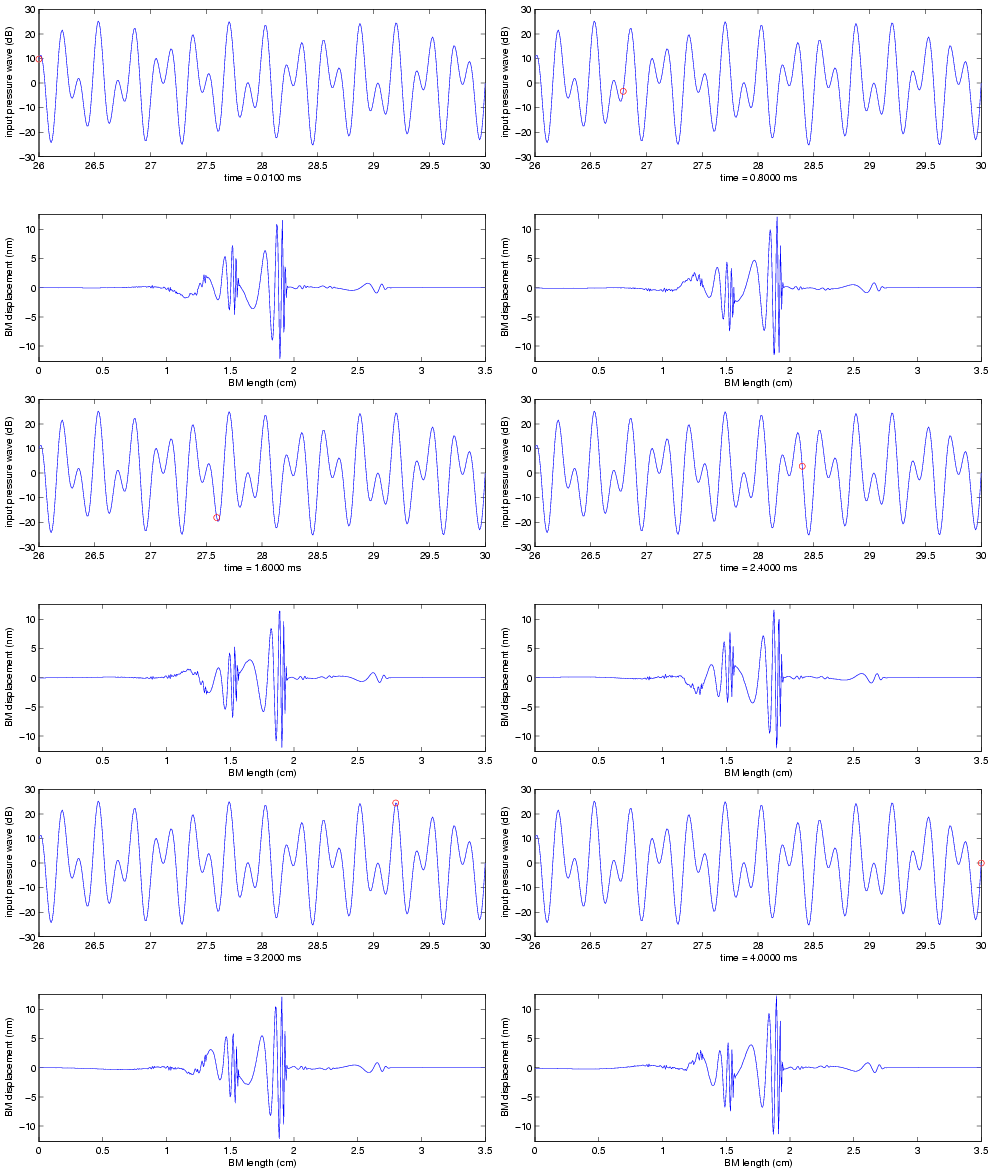
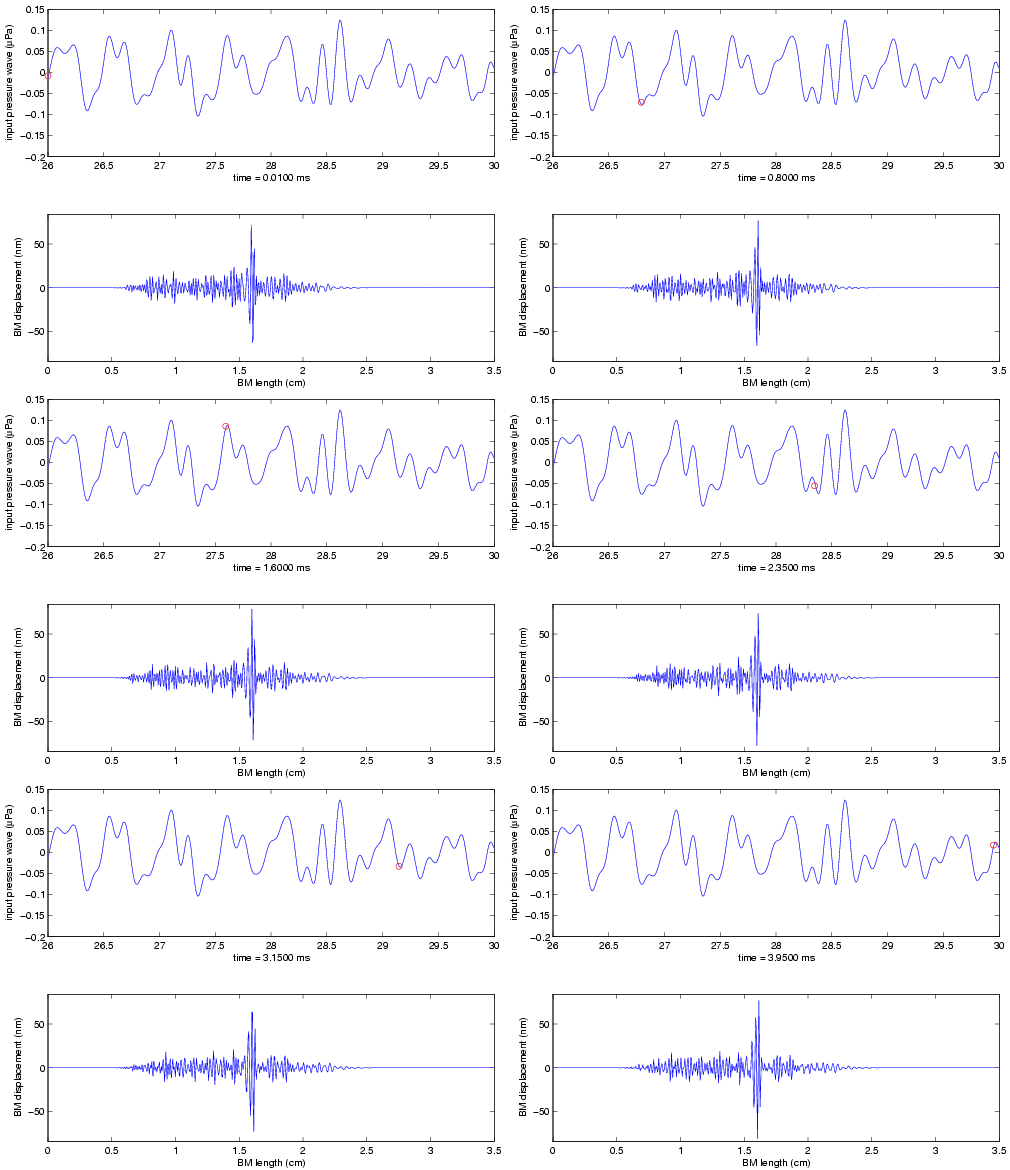
    The basilar membrane (BM) in cochlea displaces in a transverse direction by the sound pressure with its maximal displacement dependent on the input frequence. For example, when the input signal consists of two frequency tone, we can observe two peaks over the BM motion. It is a grear advantage of the time-dependent computation of the BM motion that it can easily handle the case where the input sound contains a noise.


    Two tone input:6kHz and 3.4kHz
    Tone and noise:2kHz and Broad Band
    3D case:1kHz, 2kHz, and 4kHz

  • 2-D Ear Model and Computation of Multitone Sound.(.pdf)
    SIAM Journal on MMS, Vol4(2):664-690, 2005.(with J.Xin)

  • A Study of Hearing Aid Gain Functions Based on a Feedforward Model of Cochlea. (.pdf)
    will appear in Hearing Research, 2006.(with J.Xin and Yingyoung Qi)